
In Conversation With Mallie Loring Pratt
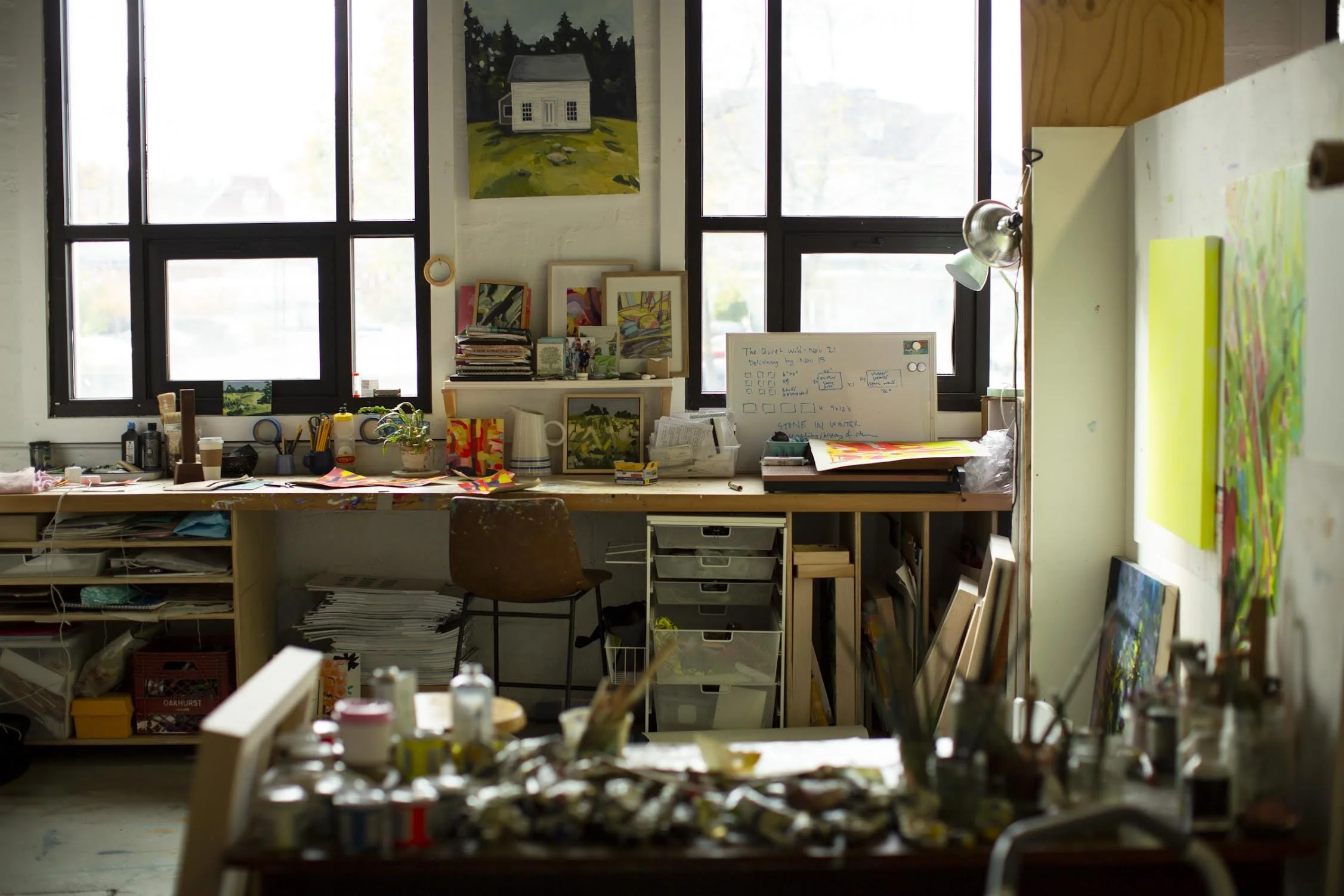
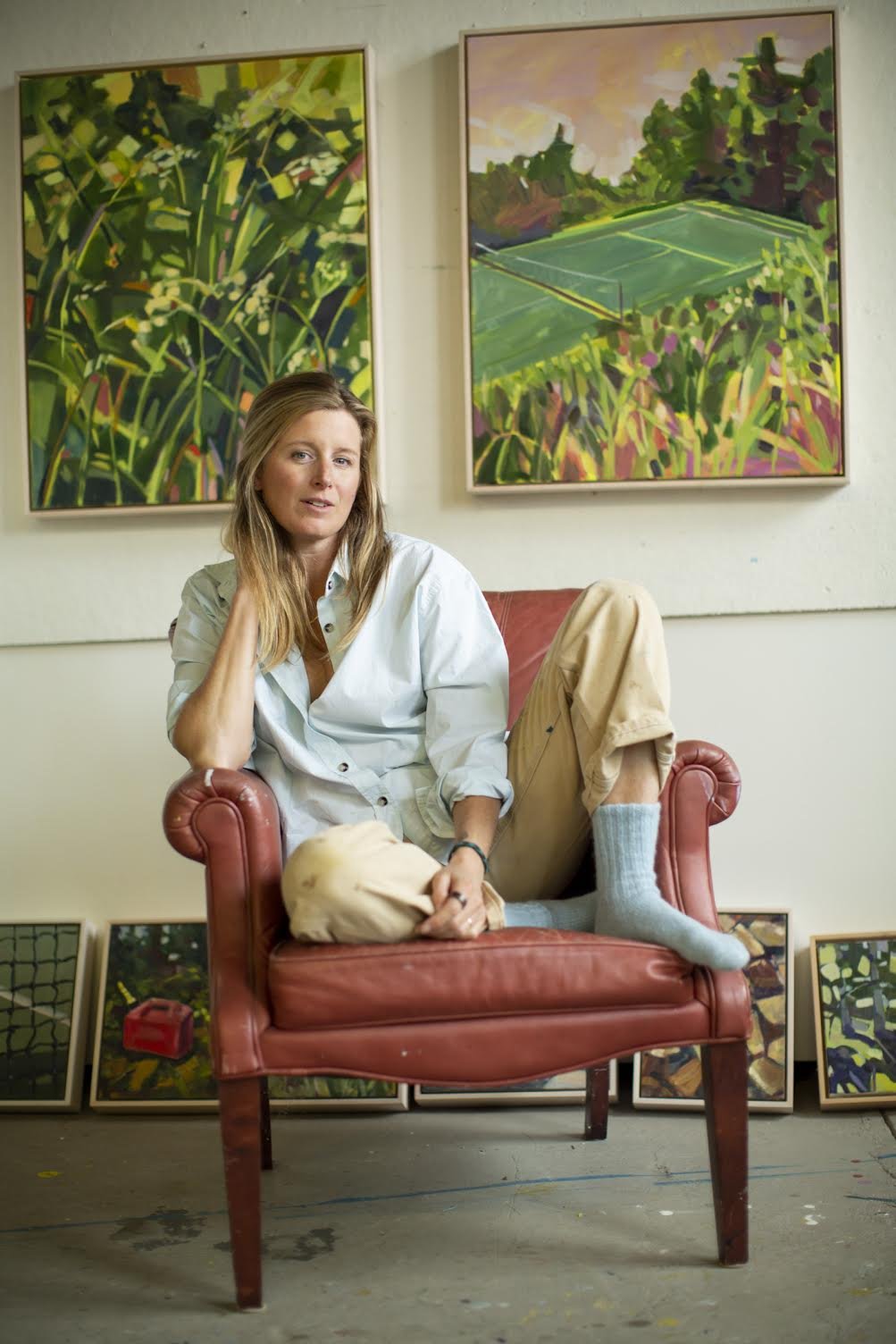
Mallie Loring Pratt talks about painting the way some people talk about being outdoors: as something you enter fully, without rushing, without an exit strategy. During our conversation, it became clear that for her, making work isn’t just about the hours spent in the studio, it’s about attention, immersion, and giving yourself the space to follow an idea wherever it wants to go.
A perfect studio day, she tells me, is a protected one. Almost nothing on the calendar. Time to start outside, a walk, a trail run, cross-country skiing this time of year, before caffeine, headphones, and loud music take over. “I’m really trying to access the right energy,” she says. “I bounce around a lot. No time constraints. No end time.”
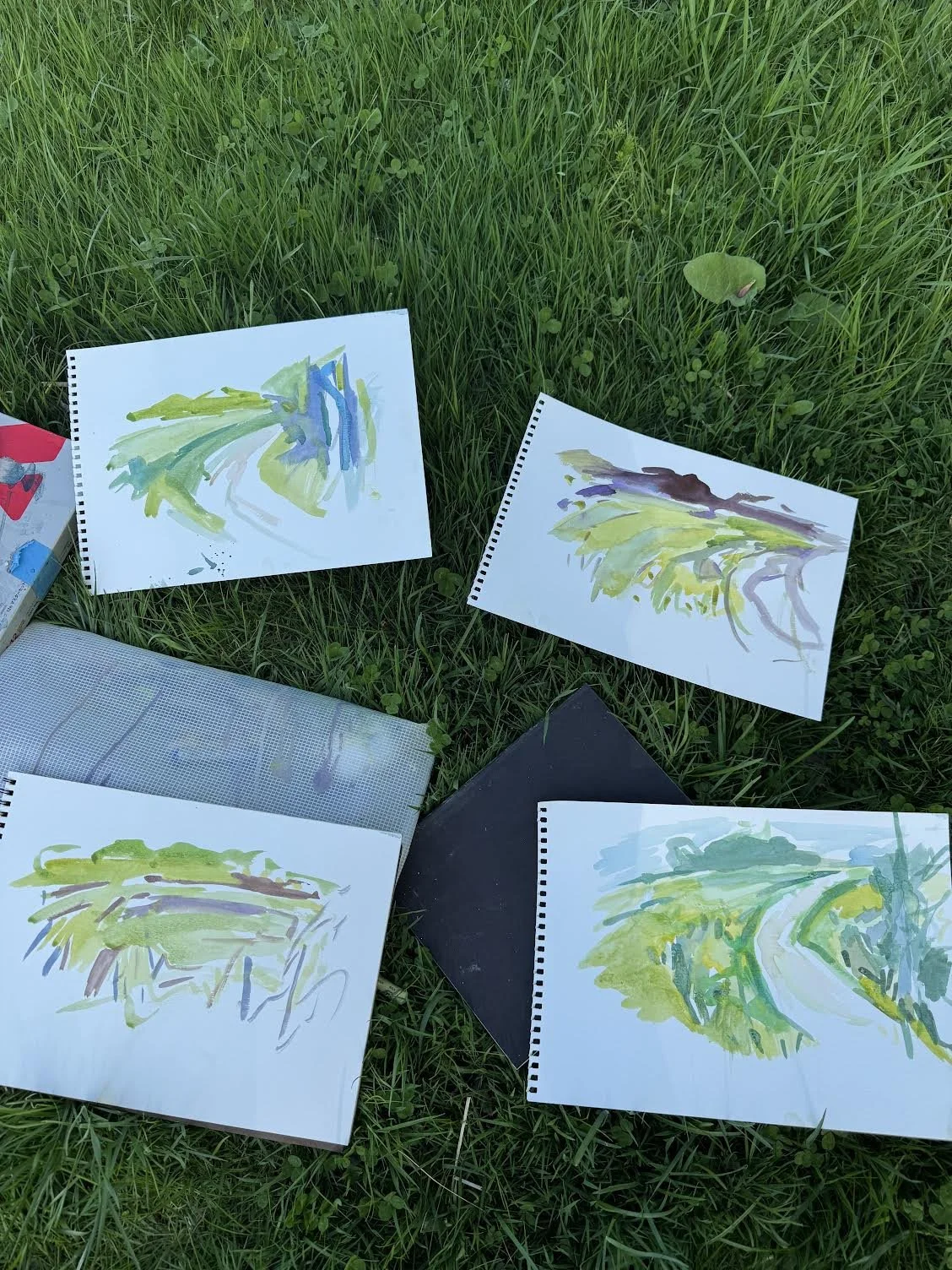
In the studio, Mallie works on several paintings at once. There’s usually one “serious” piece tied to a deadline, another more experimental version of that idea, and a constellation of smaller studies. It’s a setup that allows for movement between commitment and play, intention and curiosity.
Sound plays a big role in shaping her mindset. Lately, she’s been revisiting Neil Young’s full discography, then toggling to A Tribe Called Quest or The Fugees, music that pulls her straight back to her art school days. Podcasts make an appearance as well, conversations with artists, musicians, comedians, voices that help her think about creativity broadly, across disciplines. When she has long, uninterrupted stretches, she listens to Krista Tippett’s On Being or This Jungian Life, letting the calm of those conversations settle into the work.
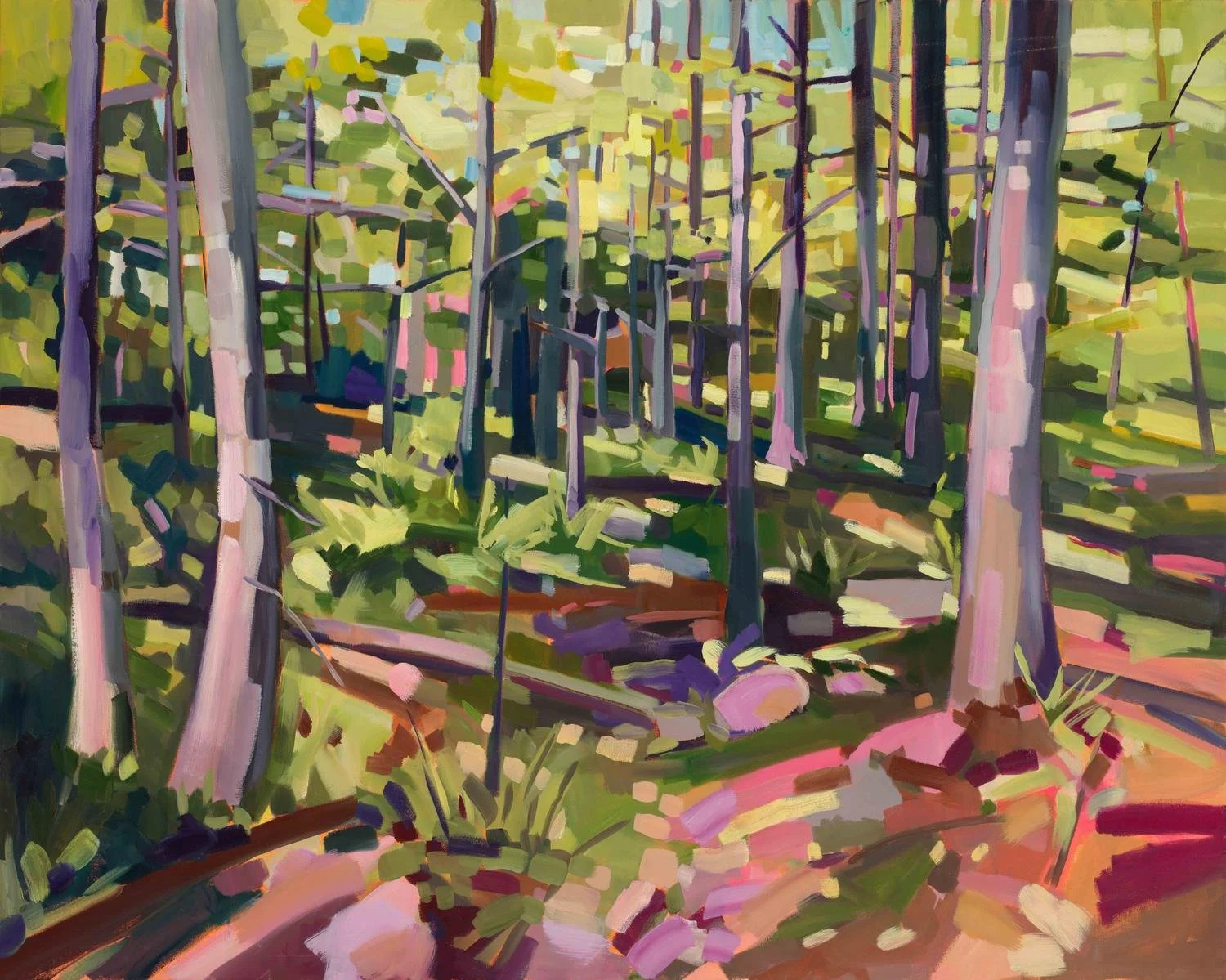
"Sanctuary" 2025, oil on canvas 48”x60”
When you enter the studio, what usually comes first - a plan, a feeling, or a material problem you’re working through?
“Usually first I have to clean up my mess from the previous day. I usually paint until the very last second before school pickup because it can take me a while to get in a groove. If there are lots of active paintings on the wall I just jump right in. If not, sketching comes first, looking at other artists’ work, and prepping canvases. When all else fails, getting some surfaces ready for when an idea hits is always a good plan.”
Do you ever miss a painting once it leaves the studio?
“Yes! I found myself scrolling my 2022 photo library with nostalgia for certain paintings just last night. There are certain paintings that feel like turning points or real symbols of a certain time in my life. I miss those ones. And I think about reaching out to their owners sometimes to check in on them like they’re my children.”
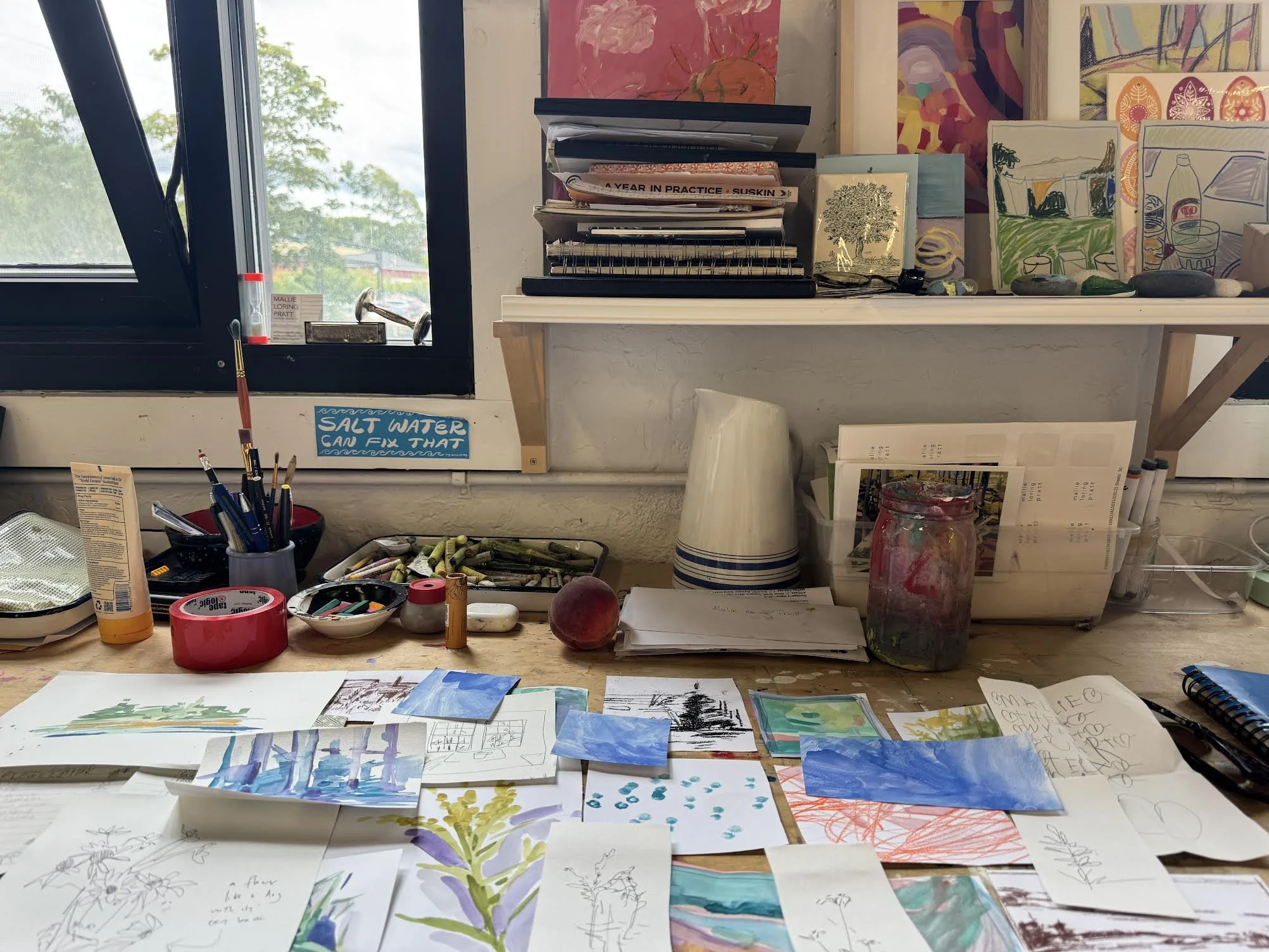
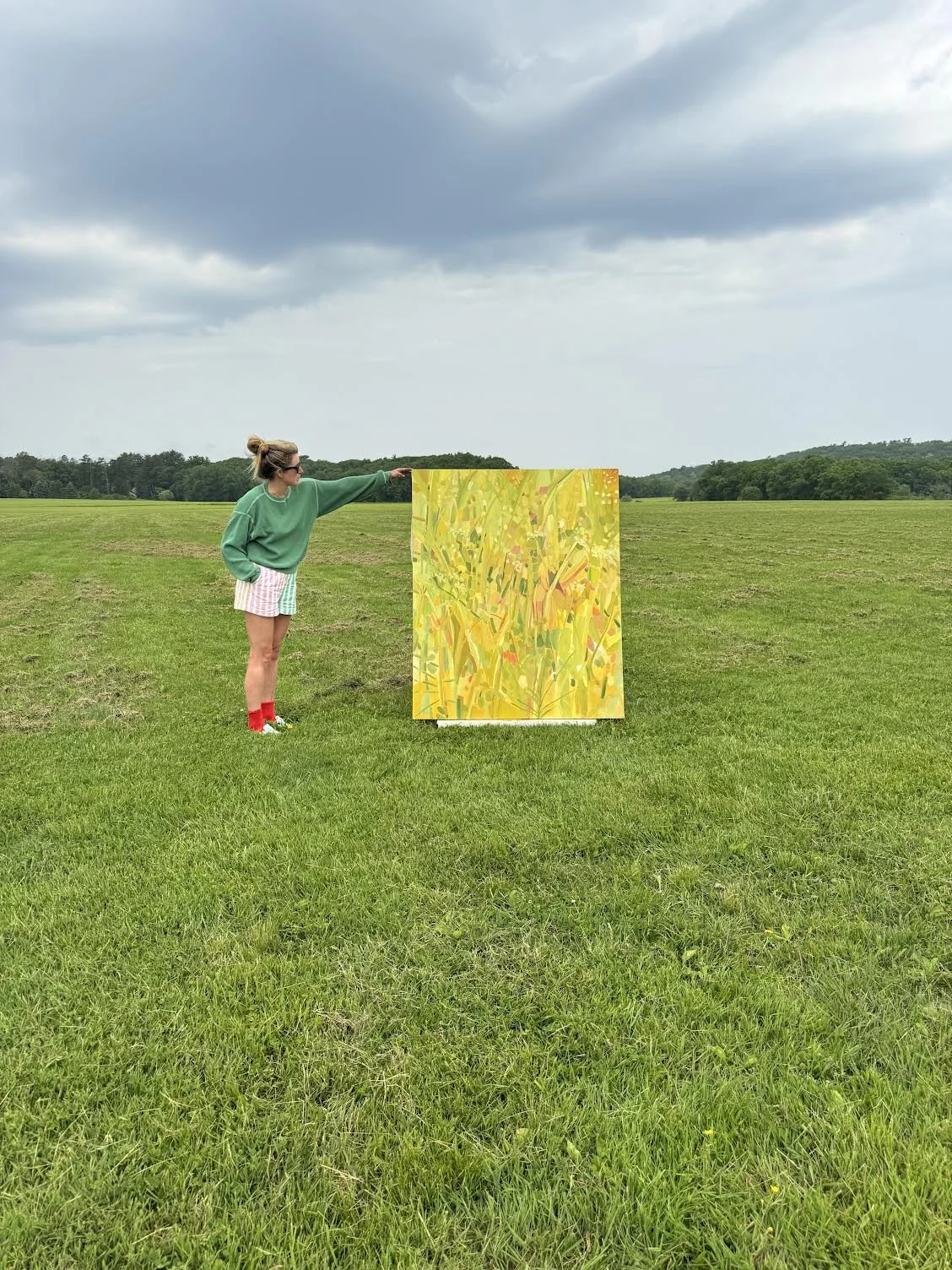
Mallie’s paintings ask for slow looking. She thinks about immersion while she works, about capturing memory and texture rather than exact likeness. Many of her perspectives come from low vantage points: the edge of a field, the subtle shift between mowed and unmowed grass, small glimpses that might otherwise go unnoticed. “I love the idea of the viewer being rewarded for taking time,” she says. “That’s how I experience the landscape.”
Knowing when a painting is finished is less about logic and more about instinct. Mallie distinguishes between the moment when the idea arrives and when the painting catches up. There’s often a stretch of discomfort - the “this is so ugly” phase - before things click. One of her favorite techniques is deceptively simple: she walks into her studio mate Leslie’s space, closes her eyes for about twenty seconds, then walks back. When she opens them, what needs to change usually presents itself immediately. If it doesn’t, the painting might be done.
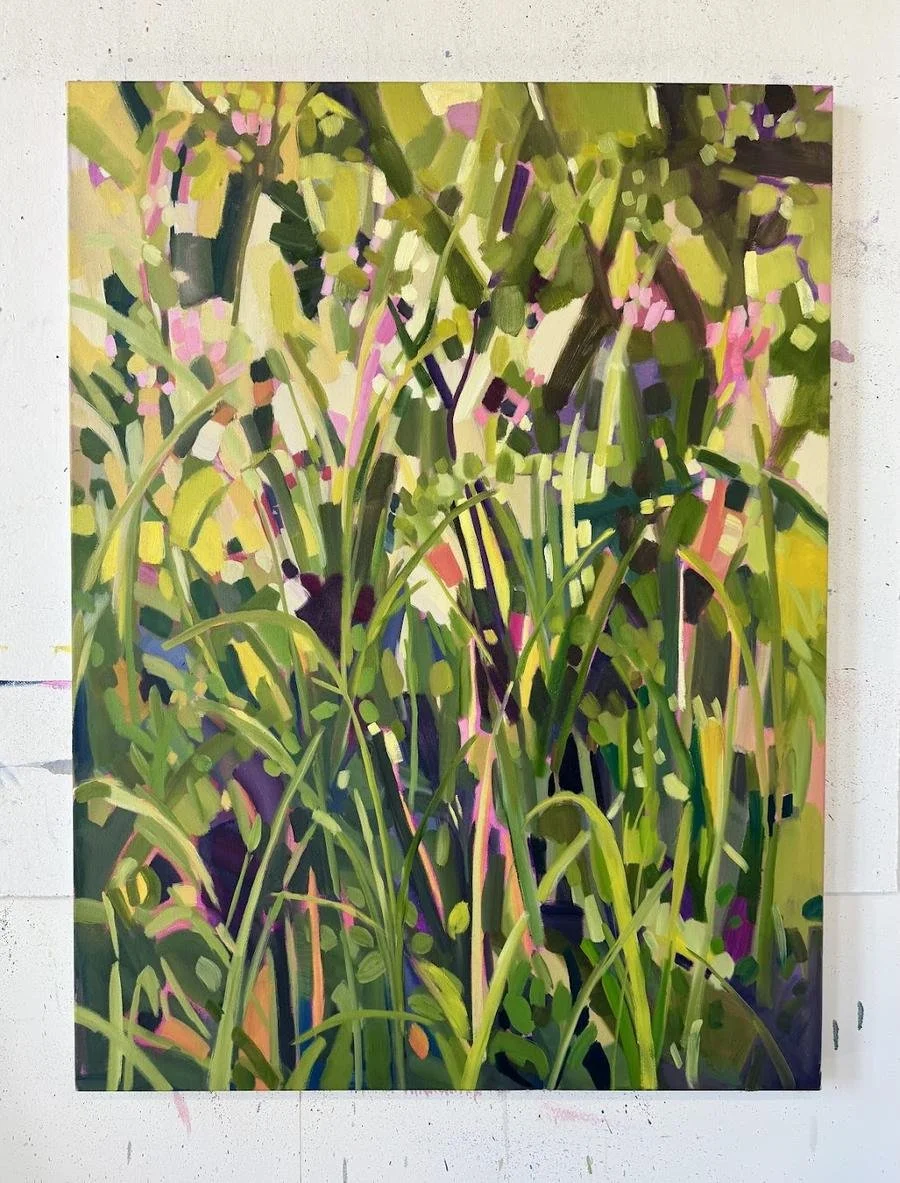
"Azaleas and Grasses" 2025 oil on canvas 48”x36”
Although her work can read as restrained, Mallie laughs at that description. “I feel like I have no restraint,” she says. She’s additive by nature, building paintings the way she describes making soup, adding and adding until it feels right. That said, she does enforce private rules. A restricted palette is a favorite constraint, forcing her to mix colors in unfamiliar ways and sharpen her problem-solving. If a painting feels flat, she’ll ruin it on purpose - flooding it with color, scrambling to bring it back. “Painting is like sports,” she says. “A game. A fight. You struggle, then you find a way to win.”
Time away from the studio is both necessary and destabilizing. After a few weeks, she gets restless - ideas stack up with nowhere to go. But distance brings perspective too, especially time spent outdoors. Nature isn’t a break from her practice; it’s embedded within it.
Are there artists, writers, or even non-art influences that you return to often?
“I have been obsessed with Alex Katz and Lois Dodd for a longggg time. I showed Claudia Keep ages ago in Maine and have closely followed her paintings. Right now I am so into Lauren Luloff’s paintings on silk .They’re like painterly, airy translucent quilts. When I need a pick me up for inspiration I listen to Mary Oliver’s interview with Krista Tippett on On Being. I generally read books about New England plants and ecology, ore small bites of poetry like Kate Baer’s new book, or occasionally the genre of artistic “self help” books just really hit the spot (Artist’s Way, Jacqueline Suskin’s A Year in Practice)”
What kind of work are you drawn to when you’re looking - and does it resemble your own practice, or feel totally different?
“When I’m looking at work I tend to be drawn to innovative use of color or materials. Particularly painters who are pushing materials in inventive ways. I feel like I break a lot of painting rules when I paint and I like to see others who have done this even more successfully. It helps drive me. Sometimes, though, I’m drawn to extremely minimal work because I know I could never! When I actually collect work I go with my gut. There is no particular style or genre that I collect, I just wait for that small drop in my stomach which tells me that something has resonated with me.”
What does it mean to you when someone chooses to live with one of your paintings?
“I am still in awe that so many people live with my paintings. It’s the best. It feels like a novel and interesting kind of connection. Like we see and understand the world in the same way. I sometimes imagine invisible lines connecting me to all the people who own my paintings. I simultaneously feel embarrassed, though. Putting things you make out into the world is pretty vulnerable and I really respect anybody that does it. Almost as soon as I feel satisfied with a painting I feel embarrassed by it. I think it’s because I know I can do better....chase novelty again.”
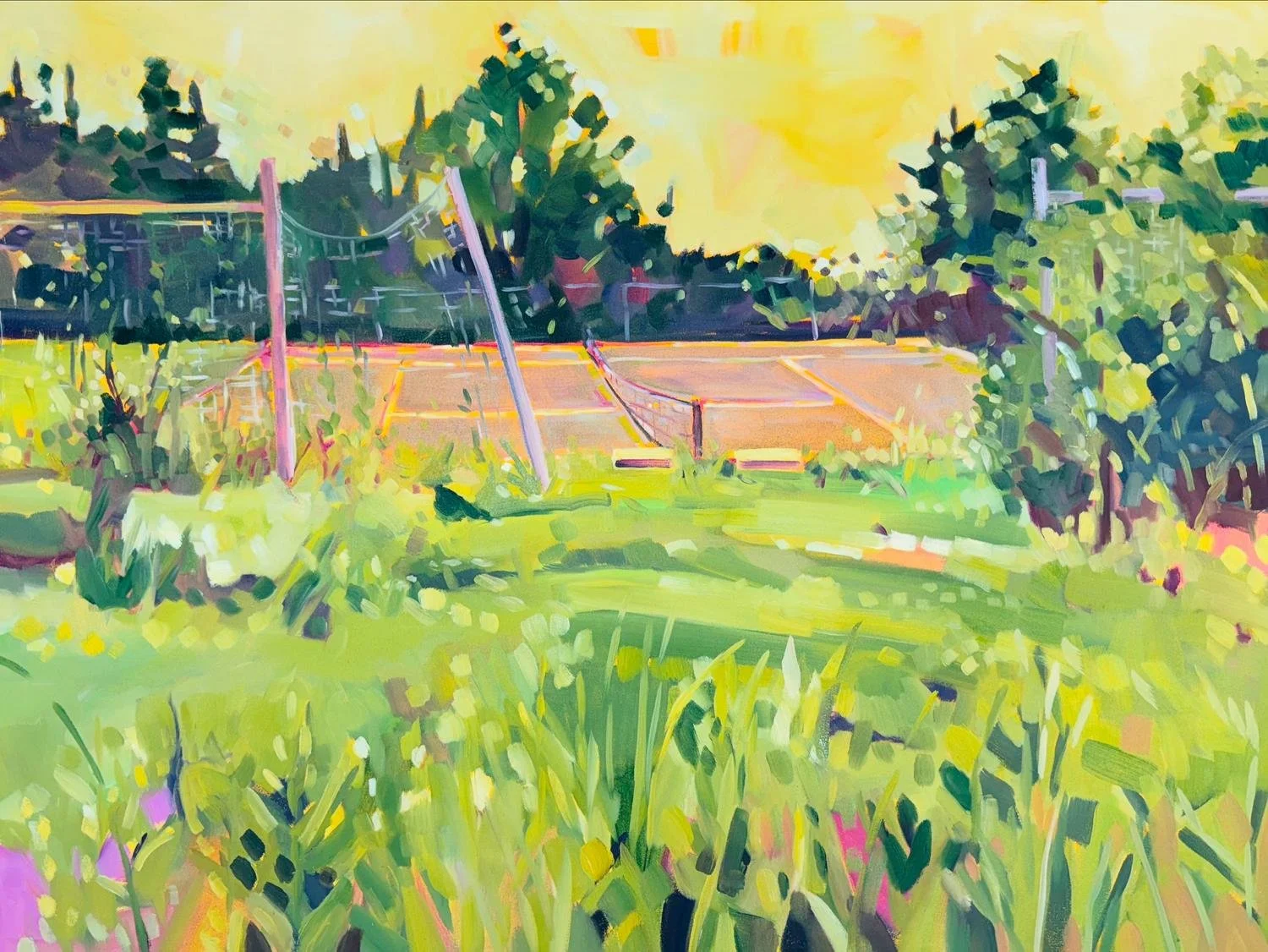
"Nichols Field Tennis Court" 2025 oil on canvas 36” x 48
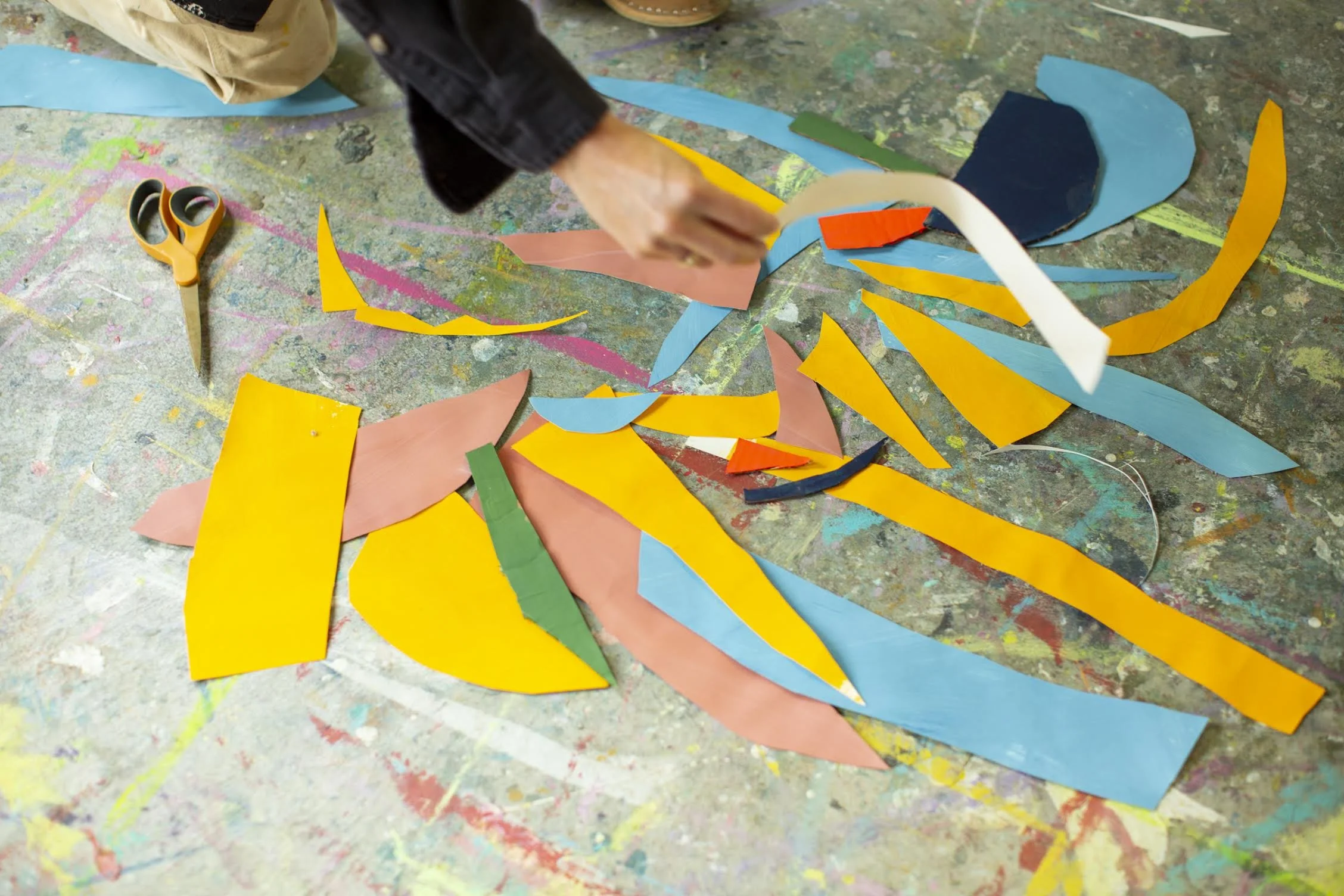
Right now, Mallie is in a moment of beginning again. With two upcoming shows and a residency in California on the horizon, she’s experimenting freely, making painted and collaged lampshades she thinks of as “paintings in the round,” starting looser, larger canvases with solvent-washed underlayers, and thinking more deliberately about movement through landscape. Walks, runs, drives, she’s interested in how motion shapes memory, and how that sensation might push her work further toward abstraction.
She’s also conscious of unlearning habits. Of staying loose. Of not becoming automatic. “I don’t want to get robotic,” she says. Side journeys, collage, design, new materials, help her disrupt familiar patterns and keep the work alive.
Toward the end of our conversation, February makes an appearance, the hard stretch of winter, the waiting. But even there, she finds energy: birds beginning to chirp, icicles melting, skiing with her kids, the joy of being cold and then warm again. “My little one throws herself into snowbanks,” she says, laughing. “Maybe that’s what my work is really about - total immersion.”
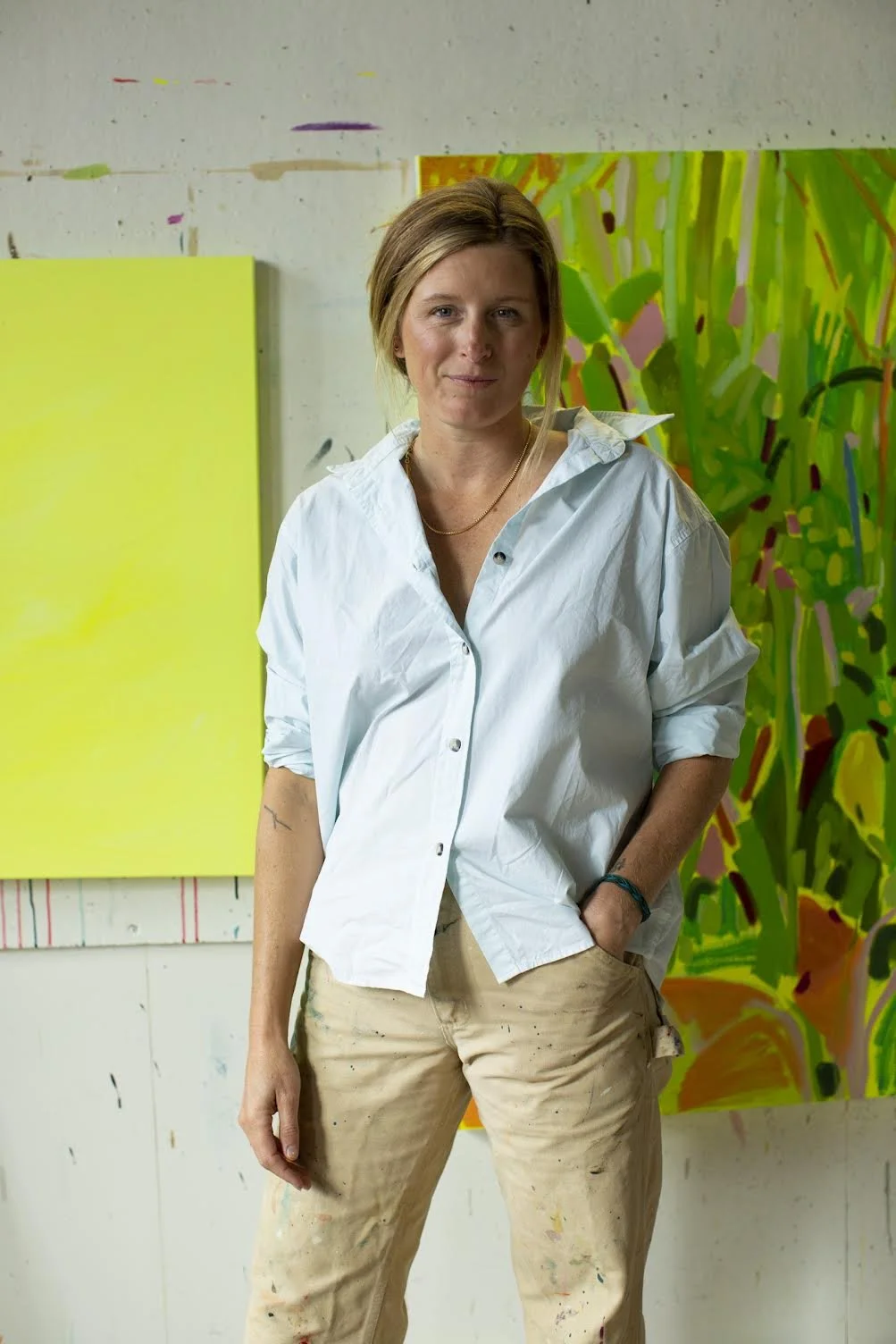
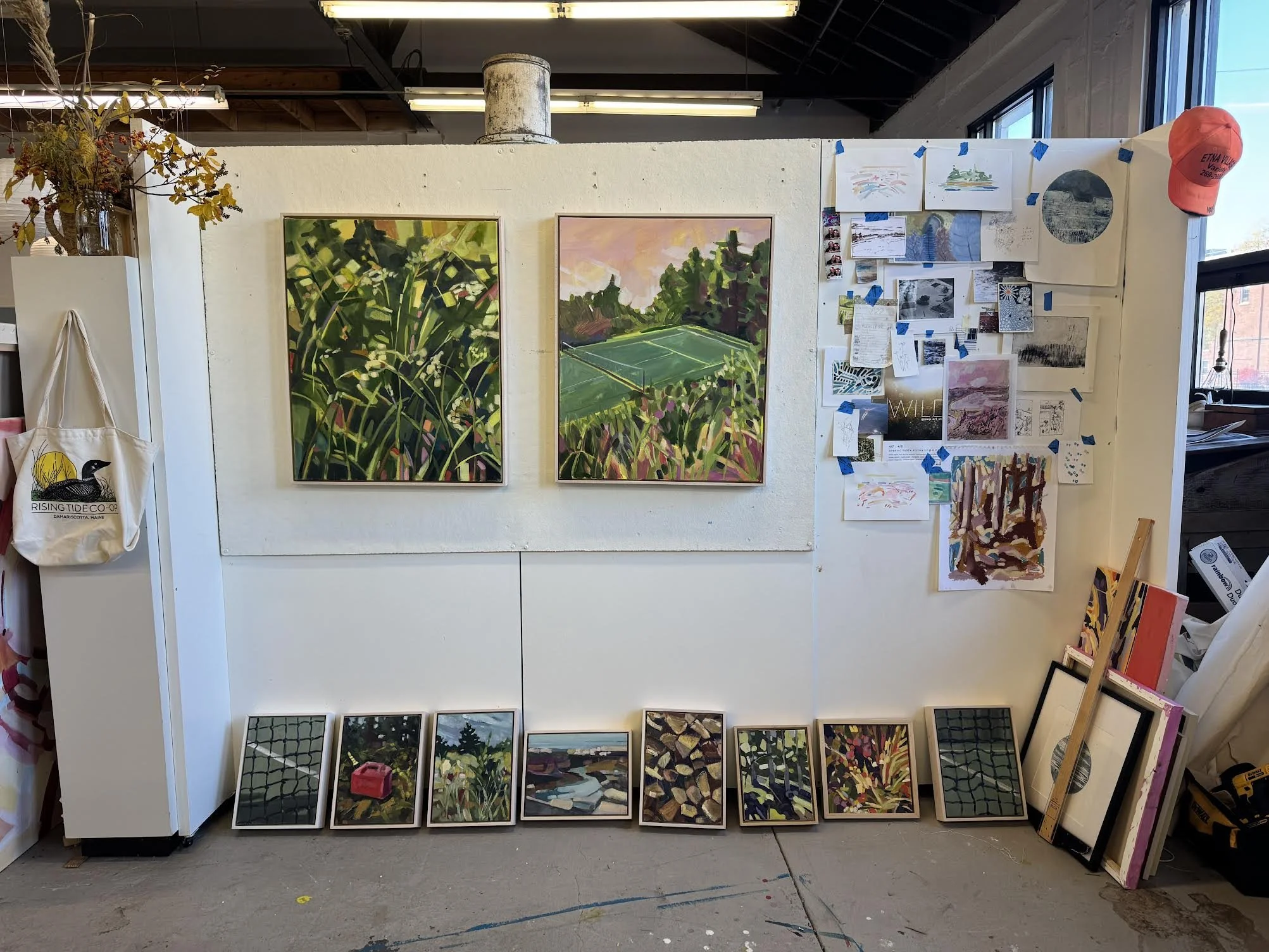
Photographer: Willy Somma