
Inside New York’s Spring Auctions: A $2.1 Billion Week
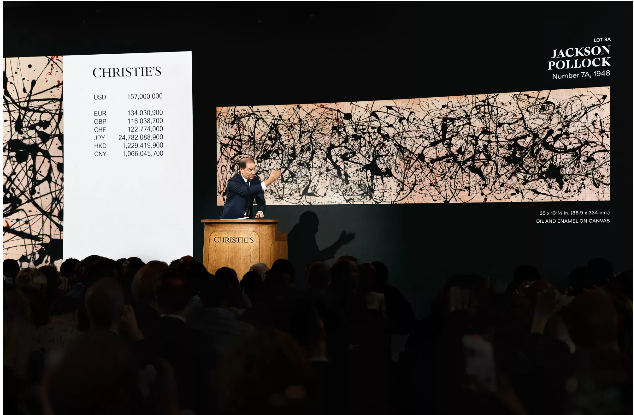
Auctioneer Adrien Meyer sells Jackson Pollock's Number 7A, 1948 the top lot of Masterpieces: The Private Collection of S.I. Newhouse, for $181.2M
Every May, the art world turns its attention to New York for the spring evening sales, and this year the headline figure was hard to ignore. Across the three major houses, the evening sales brought in around $2.1 billion, more than double last May's result and a striking rebound after several soft seasons. But a number that large rarely tells the whole story, and as advisors, the story is what we care about. Rather than recap every sale, we want to focus on the ones that best capture where the market now stands.
Christie's set the tone on Monday, May 18, with $1.1 billion across two back-to-back evening sales. The first was dedicated to the private collection of S.I. Newhouse, the late Condé Nast chairman and one of the most significant collectors of the past century. Sixteen works brought $631 million. The undisputed star was Jackson Pollock's Number 7A, 1948, an eleven-foot canvas from his breakthrough years and, by Christie's account, the largest of his drip paintings still in private hands. It sold for $181.2 million, nearly tripling the artist's previous auction record. Constantin Brancusi's gleaming bronze Danaïde followed at $107.6 million, a record for the sculptor and one of the highest prices ever paid for a sculpture at auction.
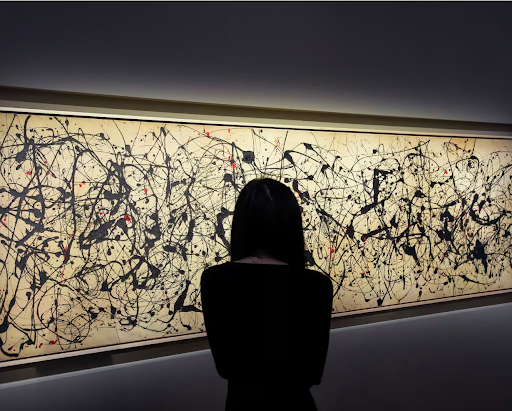
Number 7A, 1948, by Jackson Pollock. Photograph: Eduardo Muñoz/Reuters
Christie's set the tone on Monday, May 18, with $1.1 billion across two back-to-back evening sales. The first was dedicated to the private collection of S.I. Newhouse, the late Condé Nast chairman and one of the most significant collectors of the past century. Sixteen works brought $631 million. The undisputed star was Jackson Pollock's Number 7A, 1948, an eleven-foot canvas from his breakthrough years and, by Christie's account, the largest of his drip paintings still in private hands. It sold for $181.2 million, nearly tripling the artist's previous auction record. Constantin Brancusi's gleaming bronze Danaïde followed at $107.6 million, a record for the sculptor and one of the highest prices ever paid for a sculpture at auction.
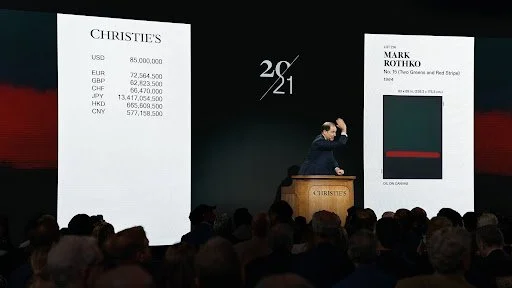
Adrien Meyer sells the Mark Rothko from the collection of Agnes Gund for $98.4 million | Courtesy of Christie’s
The evening's most resonant moment, at least for us, came with three works from the collection of Agnes Gund, the philanthropist and longtime Museum of Modern Art trustee, who died last September. Her Mark Rothko, No. 15 (Two Greens and Red Stripe) from 1964, sold for $98.4 million, a new record for the artist. What we love about that lot is its backstory. According to Christie’s, Gund bought the painting directly from Rothko in 1967, as a young collector on a studio visit, and it hung in her living room for decades, never offered on the market until now. A great work, a great eye, and a personal history: that combination is exactly what the market rewards.
The week had actually opened the previous Thursday, May 14, when Sotheby’s held a white-glove single-owner sale of the collection of the late dealer Robert Mnuchin. All eleven lots sold, totaling $166.3 million, led by a 1957 Mark Rothko that brought $85.8 million. That energy carried through to Tuesday, May 19. Sotheby's modern art sale totaled $303.9 million with more than 97 percent of lots sold, led by Henri Matisse's La Chaise Lorraine at $48.4 million and a charming oddity, a rare painted bottle by René Magritte that set a category record. Phillips, meanwhile, had a white-glove evening, every lot sold, for a total of $115.2 million, more than double its result from a year ago.
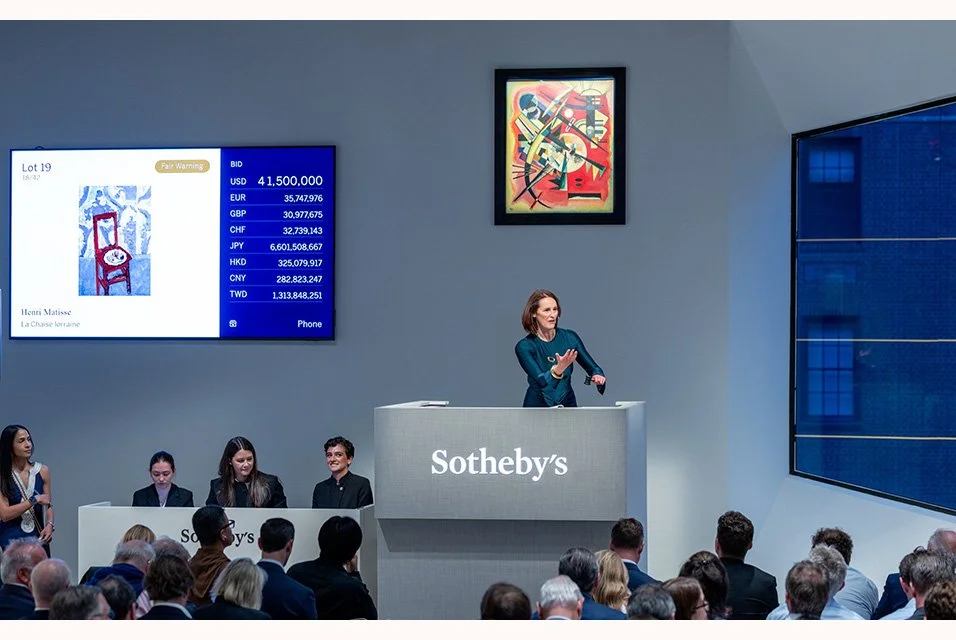
Helena Newman, Sotheby's Chairman of Impressionist & Modern Art Worldwide, fields bids during Modern Evening Auction. Courtesy Sotheby's.