
A Short History of Animal Companions in Art
Look closely at almost any period of Western art and you will find an animal holding its ground beside the patrons and the saints. A terrier settles at the feet of a Flemish couple, an ermine is cradled in a Renaissance portrait, a snarling dog is rendered in comic-book dots. For centuries, artists have kept these companions in the frame, sometimes as loaded symbols, sometimes as beloved subjects, and sometimes as the whole reason the picture exists.
What follows is a loose tour through art history told through some of its most memorable animal companions. It ranges freely across centuries and mediums, from oil paintings and watercolors to photography and monumental sculpture. Rather than tracing a strict chronology, we've chosen works that reveal the many ways artists have celebrated the animals that shared their lives and, in some cases, became enduring muses.
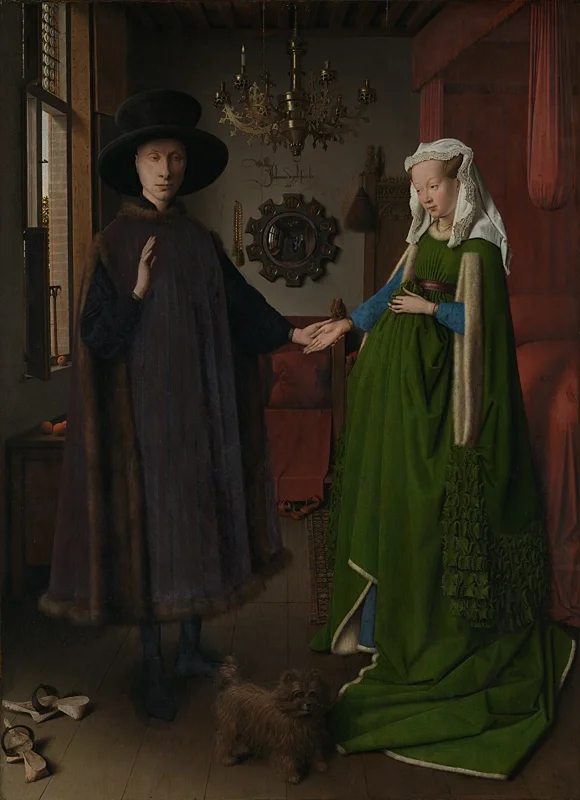
Jan van Eyck, The Arnolfini Portrait, 1434, oil on wood (probably oak), 32.4 x 23.6 in.
© The National Gallery, London
It's fitting to begin with one of Western art's most recognizable dogs. Tucked between the couple's feet is a small terrier, rendered with the same extraordinary precision van Eyck devoted to every surface in the painting, from the brass chandelier above to the convex mirror behind them. Many scholars interpret the dog as a symbol of fidelity, a common association in Northern Renaissance painting. Whatever the intent, it remains one of the earliest depictions of a companion animal in Western painting, setting the tone for centuries of artists who kept animals close at hand.
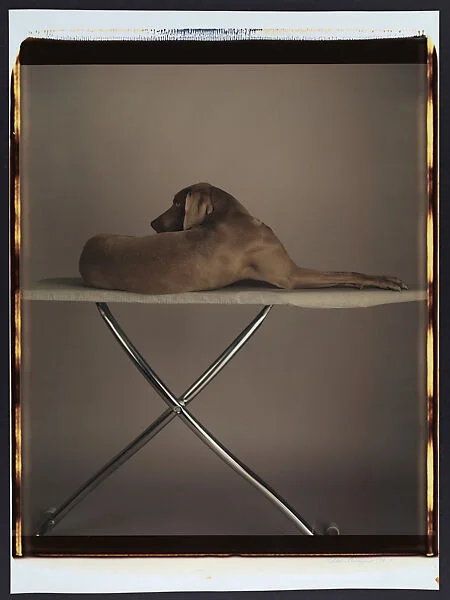
William Wegman, Fay on Board, 1987, instant dye diffusion transfer print (Polaroid Polacolor II), 24 3/16 x 20 15/16 in.
© William Wegman, Courtesy of the Artist and the Metropolitan Museum of Art
More than five centuries later, William Wegman transformed the artist-and-animal relationship into something entirely contemporary. Fay Ray became one of his most enduring muses, and his large-format Polaroids are equal parts playful and unexpectedly dignified. Whether posing for the camera or meeting the viewer's gaze, she appears quietly self-possessed. Through decades of photographs, Wegman elevated Fay Ray from companion to collaborator, producing some of the most recognizable animal portraits in contemporary art.
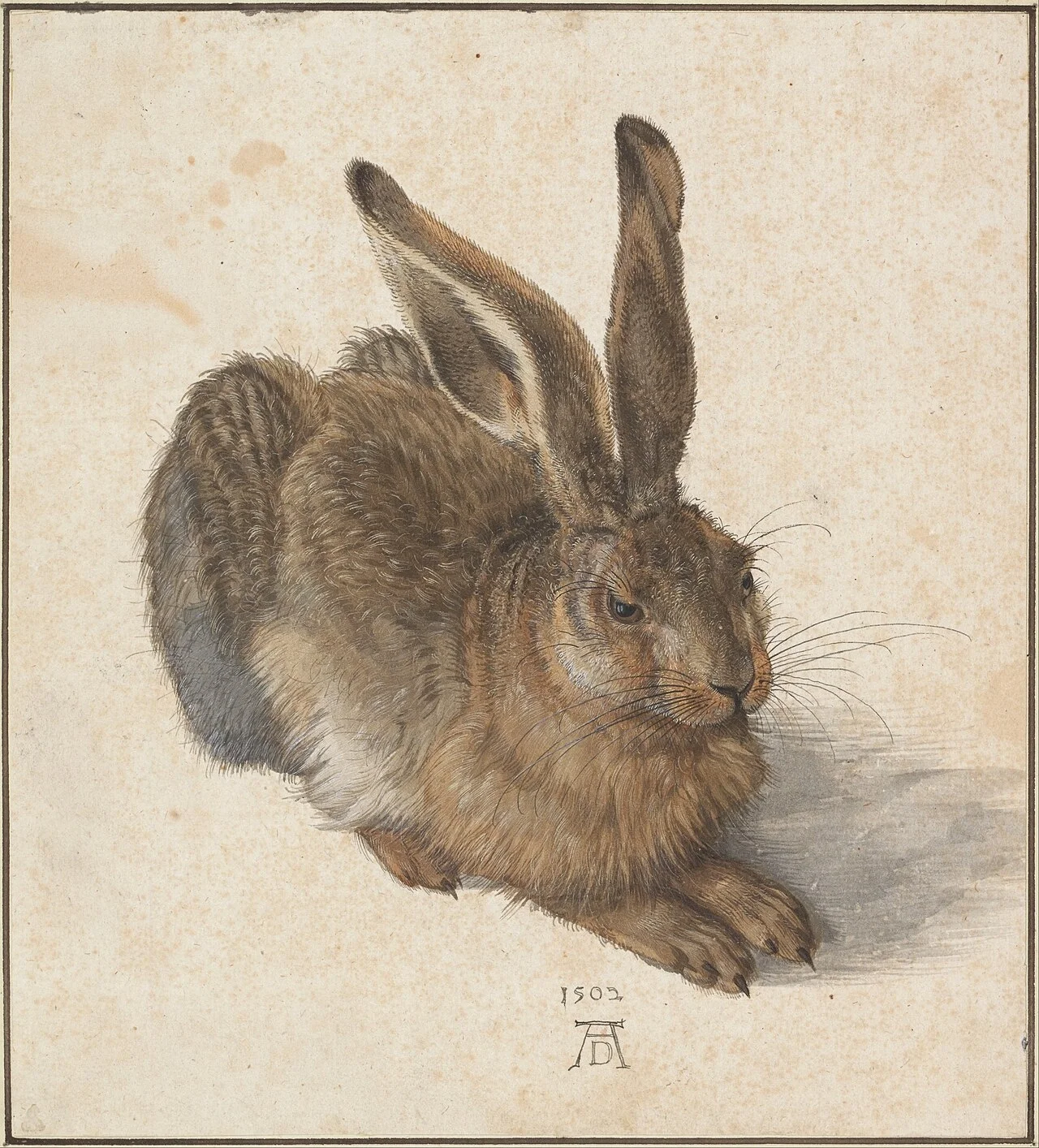
Albrecht Dürer, Feldhase (The Young Hare), 1502, watercolor and gouache, 9.9 x 8.9 in.
© Albertina, Vienna
Not every animal in this history was a pet. Dürer's hare was likely a studio subject rather than a companion, but the attention he paid it rivals anything in a commissioned portrait. Every whisker, strand of fur, and glint of reflected light is rendered with astonishing precision. The watercolor invites viewers to look at the hare as closely as they might a formal portrait. Whether he worked from a live animal or a preserved specimen remains a matter of debate. Either way, the hare receives the same close attention traditionally reserved for a human sitter.
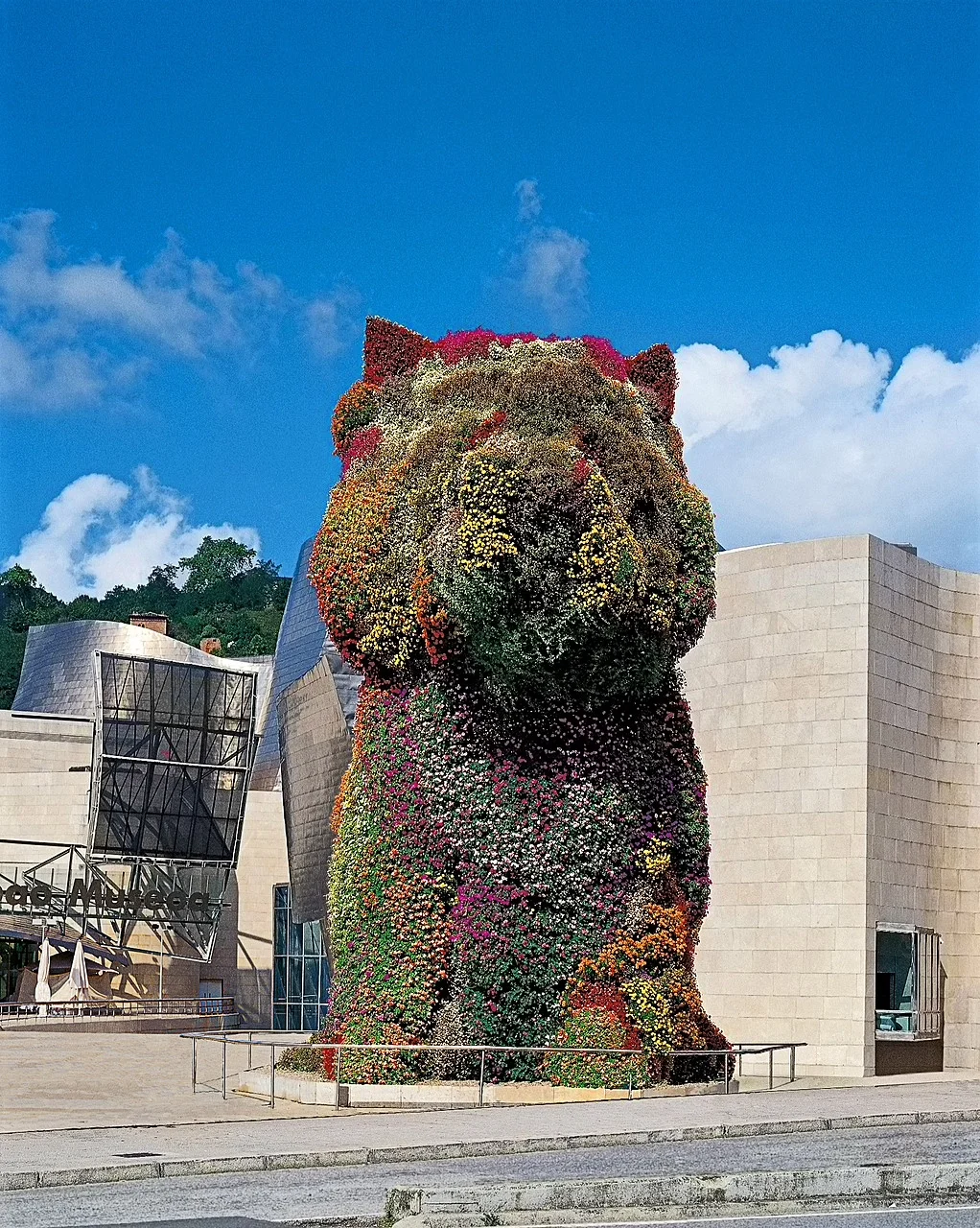
Jeff Koons, Puppy, 1992, stainless steel, soil, geotextile fabric, internal irrigation system, live flowering plants, 486 x 486 x 256 in., ed. of 1 plus AP
© Jeff Koons and Guggenheim Museum Bilbao
Few sculptures greet visitors with as much optimism as Jeff Koons's Puppy. Standing more than forty feet tall outside the Guggenheim Museum Bilbao, the monumental West Highland terrier is constructed from thousands of living flowering plants sustained by an intricate internal irrigation system. Equal parts horticulture, engineering, and sculpture, Puppy transforms one of the most familiar household companions into a joyful civic landmark. Monumental in scale yet remarkably approachable, it remains among Koons's defining public installations.
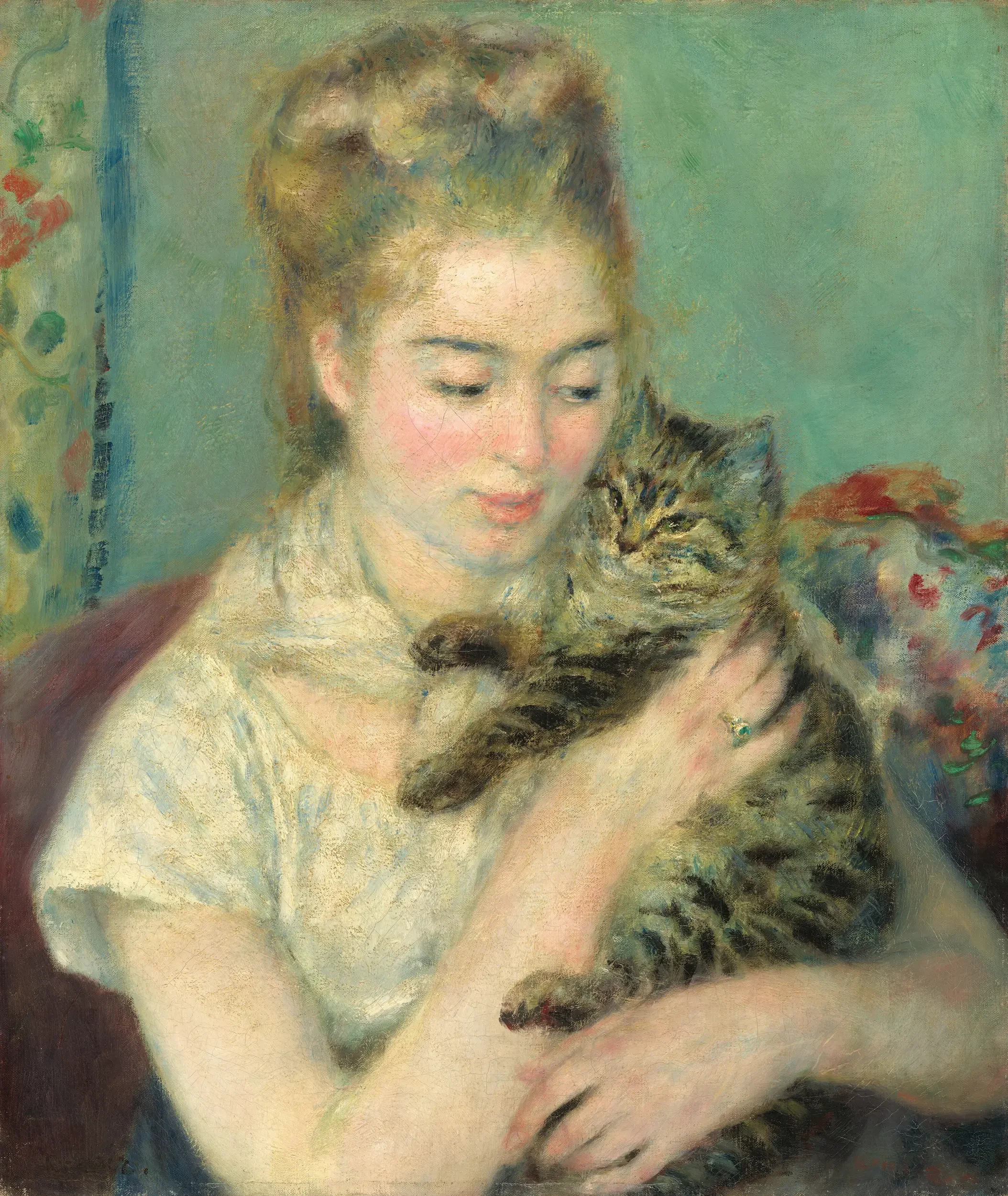
Pierre-Auguste Renoir, Woman with a Cat, c. 1875, oil on canvas, 22 1/16 x 18 1/4 in. overall, 33 1/2 x 29 7/8 x 3 in. framed
© National Gallery of Art, Washington D.C.
Renoir turns from symbolism to quiet intimacy. His sitter bends her head toward the cat curled against her, creating a portrait of everyday affection. Loose brushwork and a warm palette soften the boundary between sitter and animal, resulting in one of the most intimate depictions of a pet in nineteenth-century painting.
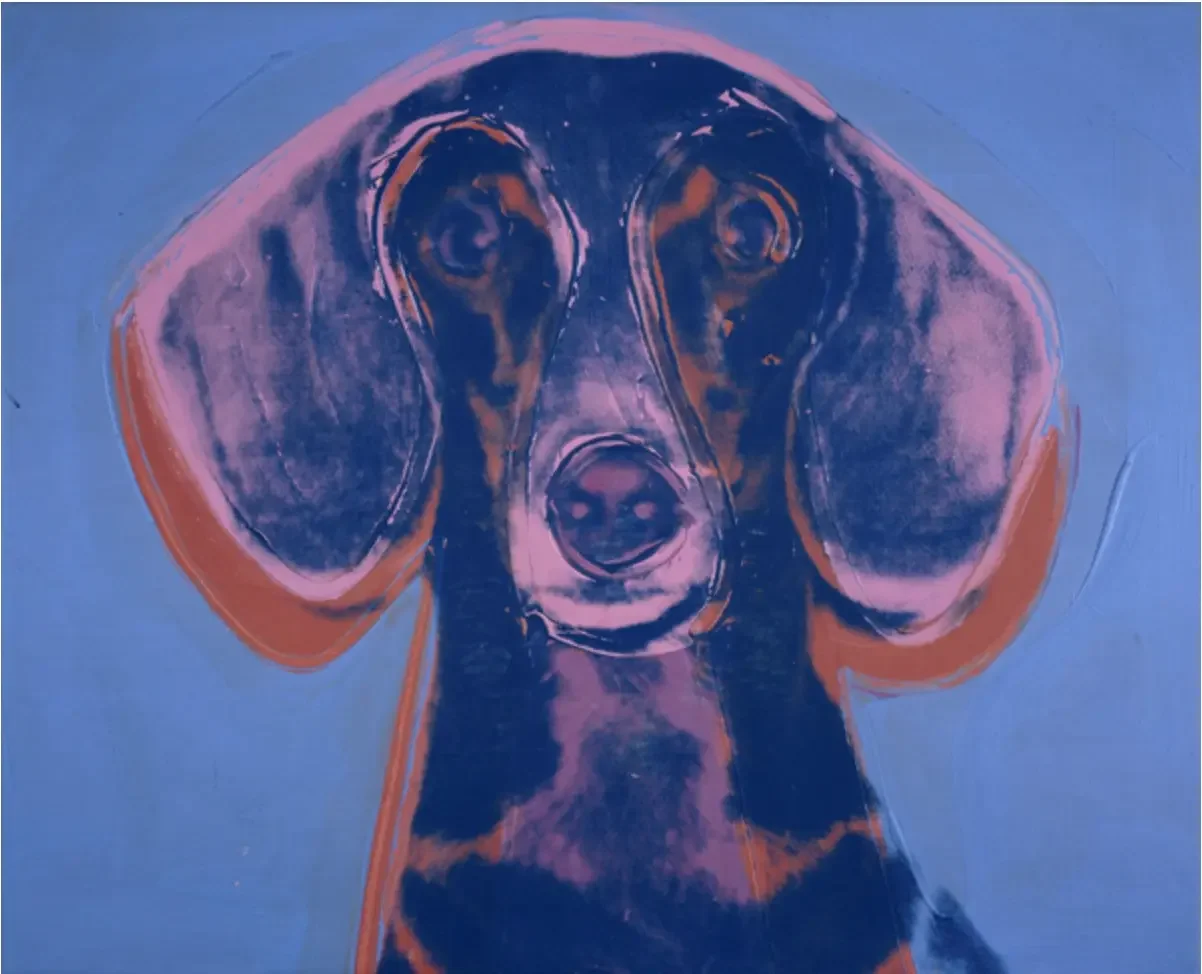
Andy Warhol, Portrait of Maurice, 1976, synthetic polymer paint and silkscreen ink on canvas, 25.9 x 32 in. unframed, 30.4 x 36.4 x 2.4 in. framed
© The Andy Warhol Foundation for the Visual Arts, Inc. Licensed by DACS, London 2023
Artwork photographed by: Antonia Reeve at the National Galleries of Scotland
Maurice was no ordinary dachshund. When collector Gabrielle Keiller commissioned Andy Warhol to paint him, the artist approached the portrait with the same visual language he had used for celebrities, socialites, and cultural icons. Bright color, flattened forms, and bold silkscreen techniques elevate an ordinary household companion into the realm of Pop Art. Beneath the vibrant surface, however, the portrait remains surprisingly affectionate. It reminds us that some of the most meaningful portraits are not reserved for public figures, but for the companions who become part of our daily lives.
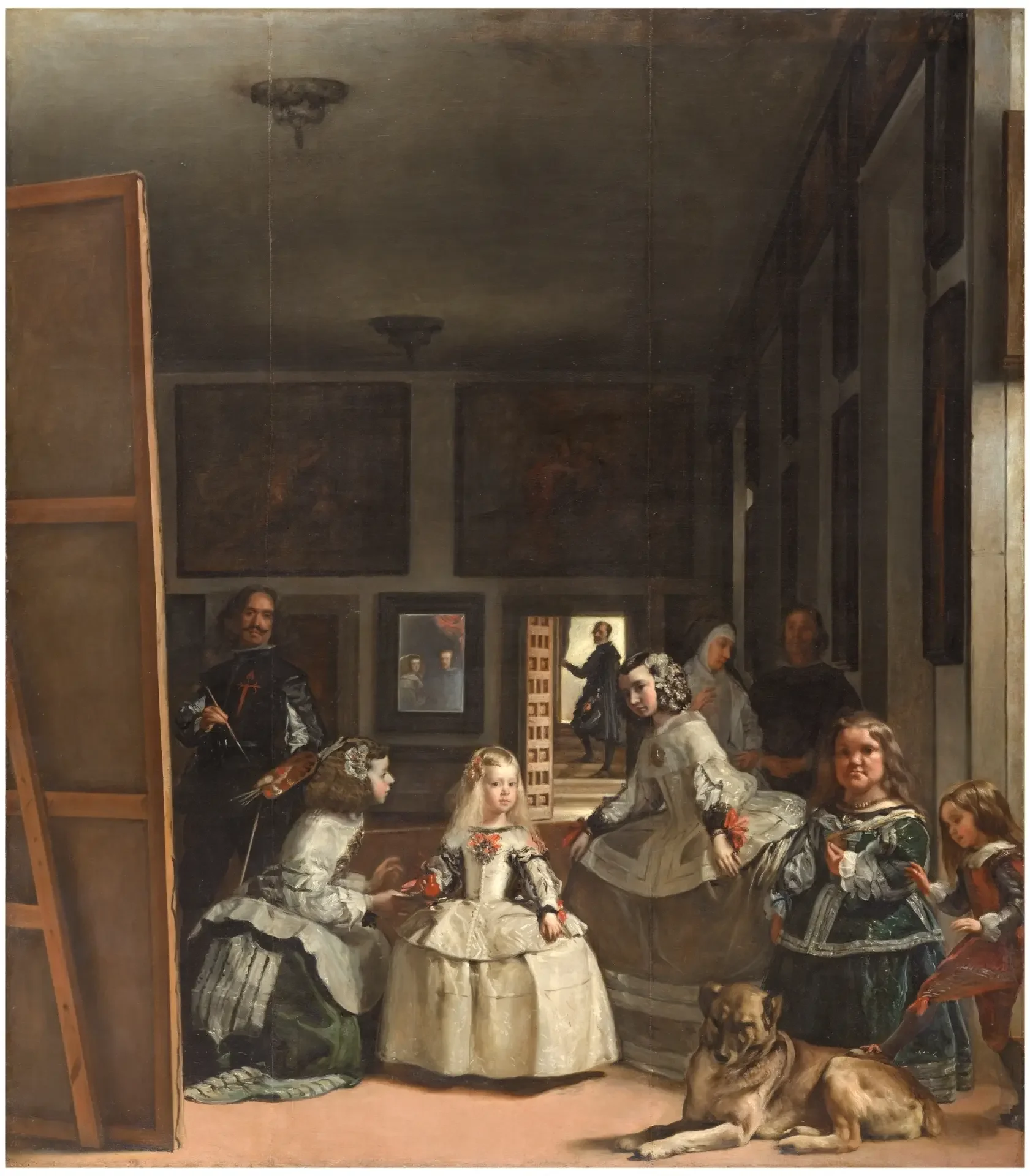
Diego Rodríguez de Silva y Velázquez, Las Meninas, 1656, oil on canvas, 125.2 x 108.7 in.
© Museo del Prado, Madrid
Among the most studied paintings in Western art, Las Meninas also contains one of its most quietly memorable animals. In the foreground of this puzzling group portrait, a large mastiff lies half asleep while a young courtier nudges it with his foot. While every other figure participates in the painting's intricate exchange of glances, the mastiff remains entirely unconcerned. In a painting obsessed with who is watching whom, it is the one figure entirely at peace, and that composure is part of its quiet genius.
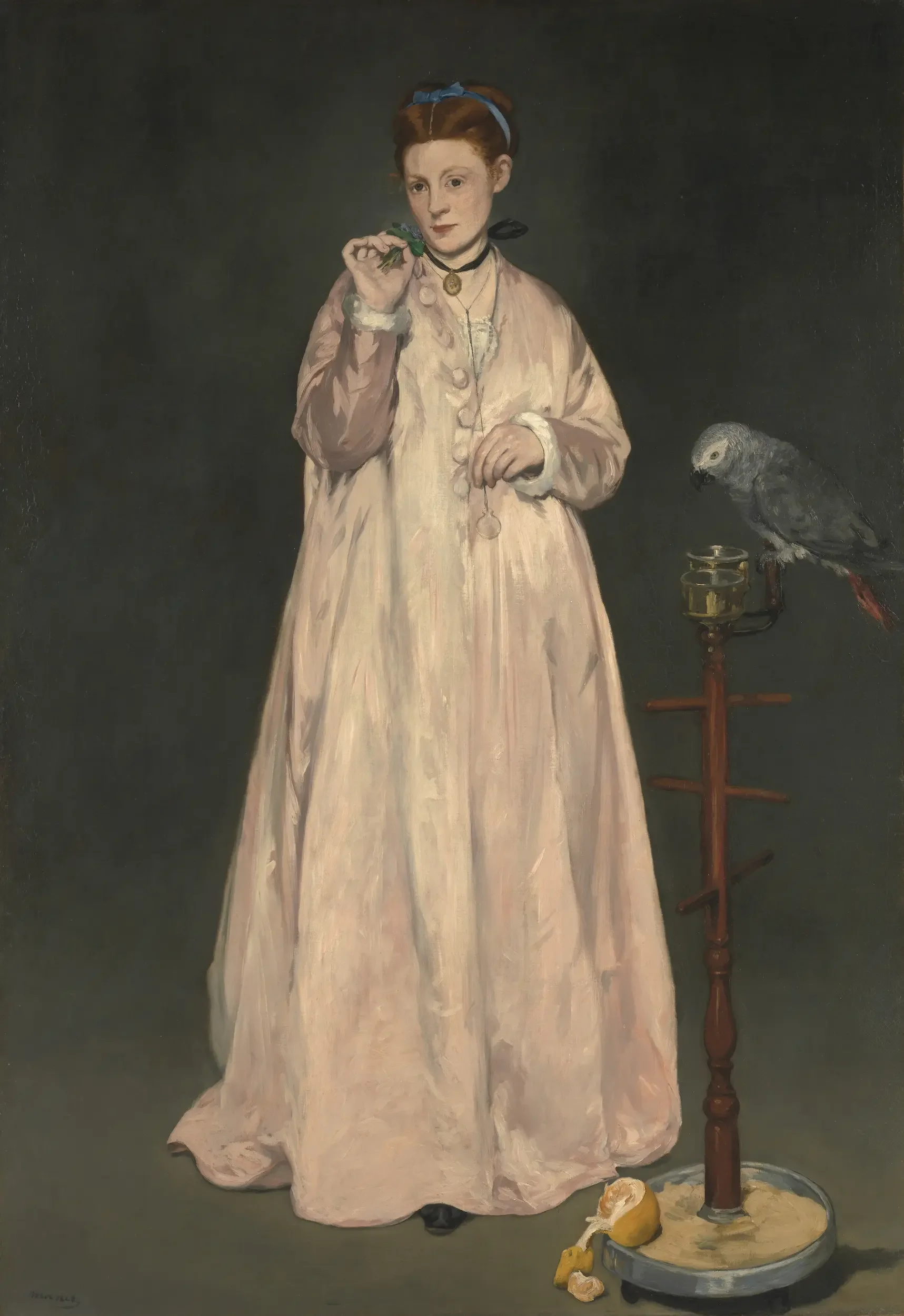
Edouard Manet, Young Lady in 1866, 1866, oil on canvas, 72 7/8 x 50 5/8 in.
© The Metropolitan Museum of Art
Manet narrows the scene to a single sitter and her parrot. Perched confidently beside Victorine Meurent, the bird is more than a decorative detail. Contemporary critics immediately noticed its presence, and later scholars have interpreted it as part of the painting's web of symbolism. At the same time, the parrot lends the composition a sense of intimacy, suggesting something of the sitter's private world.
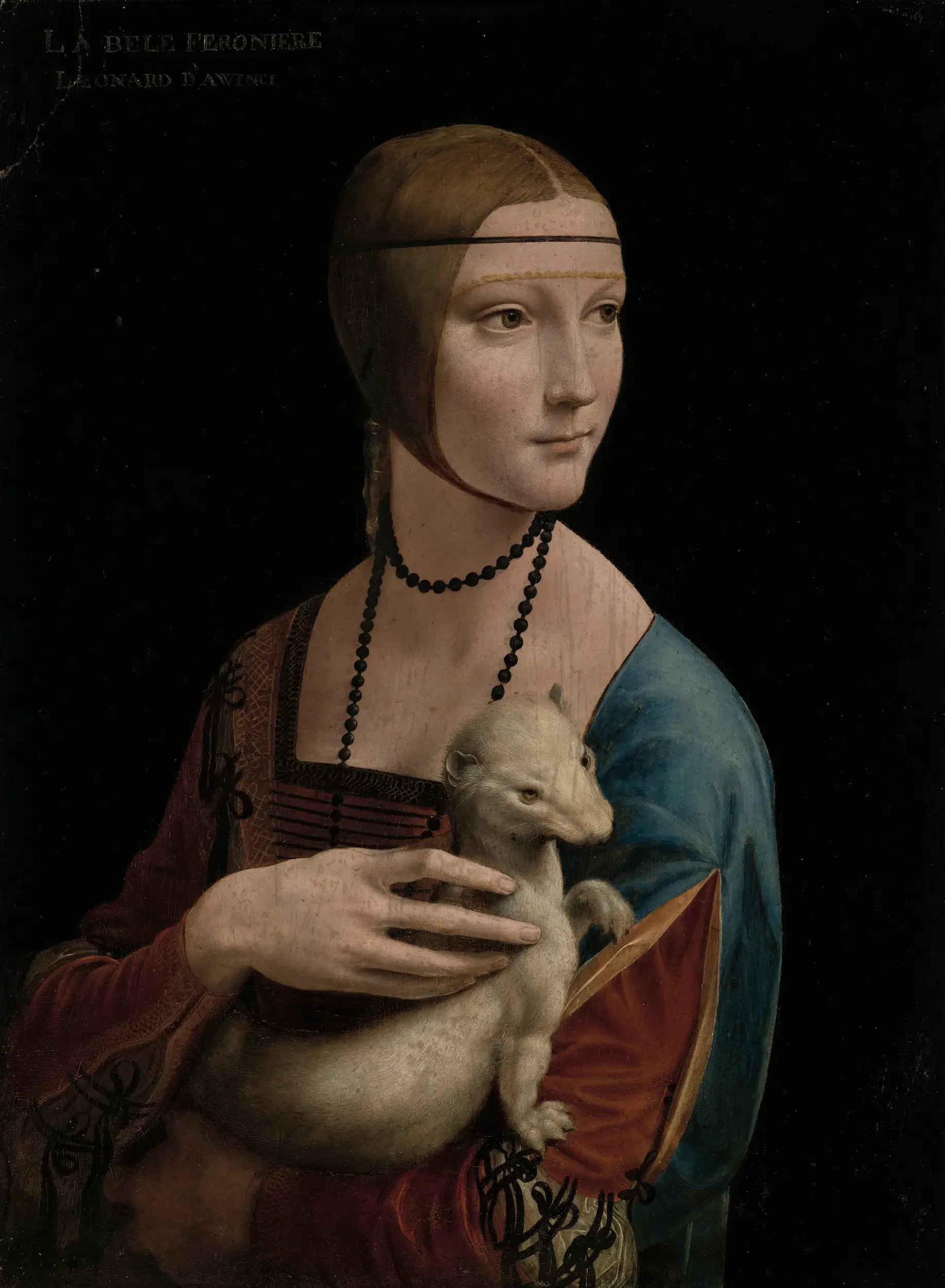
Leonardo da Vinci, Lady with an Ermine, c. 1490, oil on wood panel, 21.6 x 15.9 in.
© Czartoryski Museum, Kraków
Few Renaissance portraits are as closely associated with an animal as Lady with an Ermine. Cecilia Gallerani cradles a sleek white ermine, its body echoing the turn of her own and its muscles tensed under Leonardo's exacting hand. The animal works partly as a visual pun and partly as a symbol of purity and nobility, yet beyond those layers of meaning lies one of the most convincing depictions of an animal in Renaissance painting. It is alert, weighty, and entirely present, held with a familiarity that reads as real affection.
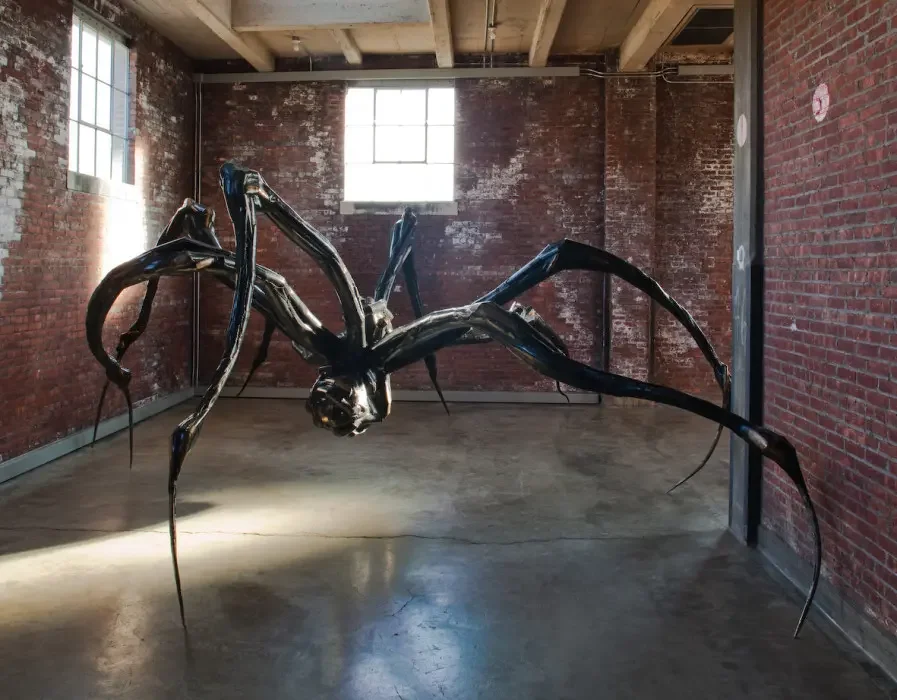
Louise Bourgeois, Crouching Spider, 2003, bronze, black and polished patina, and stainless steel, 106 1/2 x 329 x 247 in.
Courtesy Dia Art Foundation, Cheim & Read, and Hauser & Wirth © The Easton Foundation/Licensed by VAGA at Artists Rights Society (ARS), New York. Photo: Bill Jacobson Studio, New York
Not every animal in this survey is a pet. Louise Bourgeois's Crouching Spider expands the idea of an animal companion in an unexpected direction. For Bourgeois, the spider became a deeply personal symbol of her mother, whom she described as clever, patient, and protective. Rather than representing companionship in a literal sense, the sculpture explores memory, love, and resilience through one of nature's most misunderstood creatures.
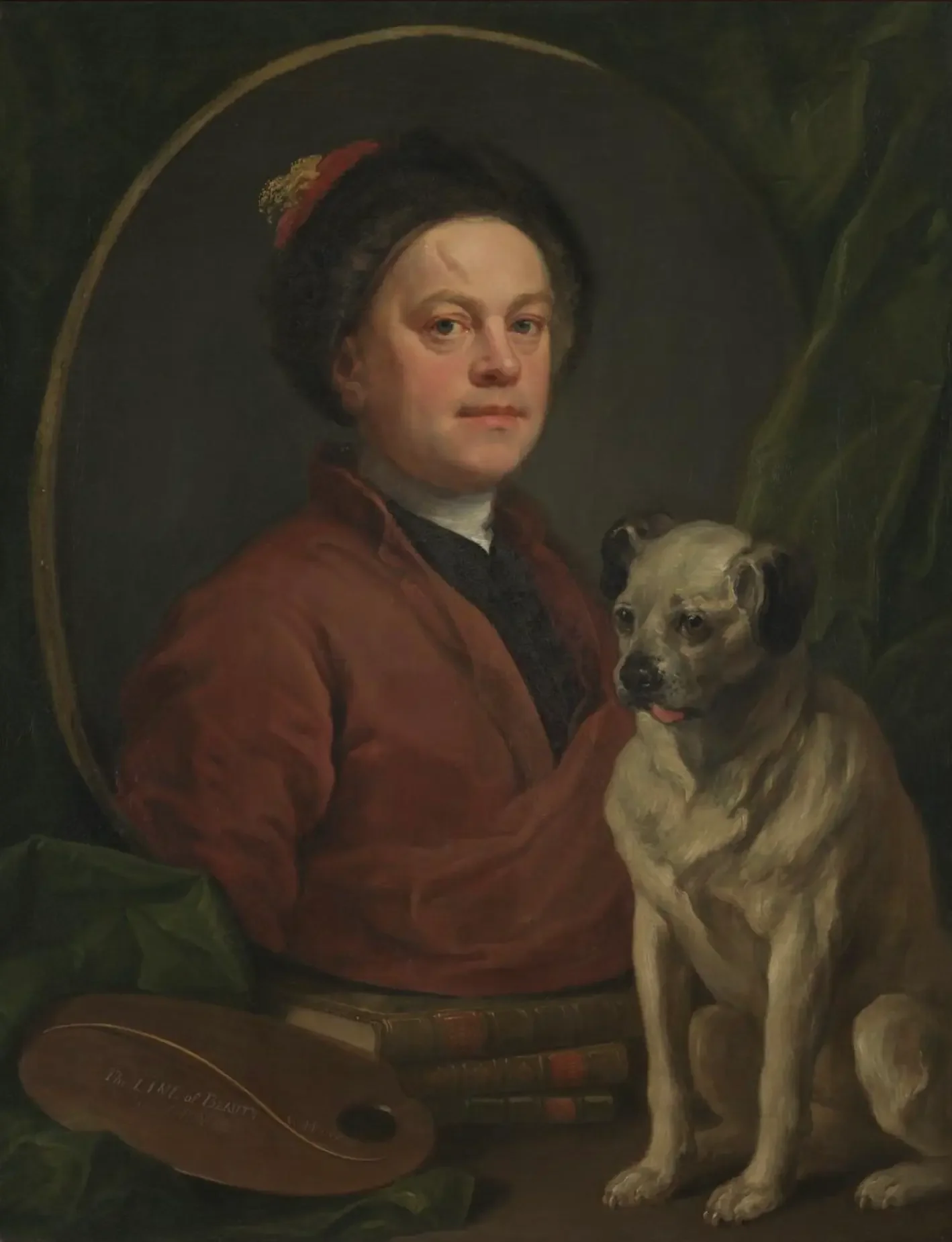
William Hogarth, The Painter and His Pug, 1745, oil on canvas, 35 1/2 x 27 1/2 in.
© The National Gallery, London
In Hogarth's self-portrait, the artist and his beloved pug, Trump, occupy the composition as equals. Their resemblance is intentional, reflecting both Hogarth's affection for his dog and his playful understanding of his own public image. Here, the companion animal is neither symbol nor ornament. It is an essential part of the portrait itself.
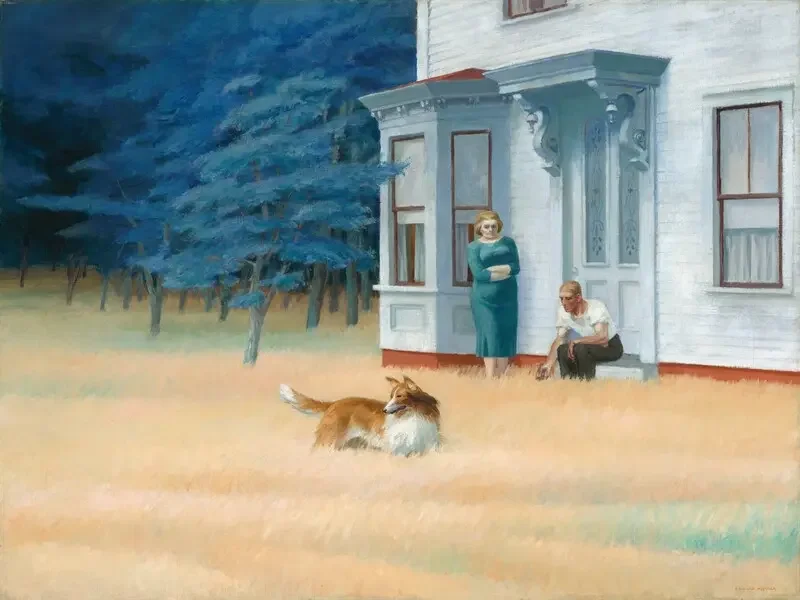
Edward Hopper, Cape Cod Evening, 1939, oil on canvas, 30 x 40 in. overall, 42 x 52 in. framed
© National Gallery of Art, Washington D.C.
In Cape Cod Evening, a collie becomes the emotional center of the composition. A couple stands in the long grass outside their house in the fading light, not quite connecting, while the dog fixes on something we cannot see. Its alert posture introduces a quiet sense of anticipation into an otherwise still composition, adding warmth and subtle tension to the scene.
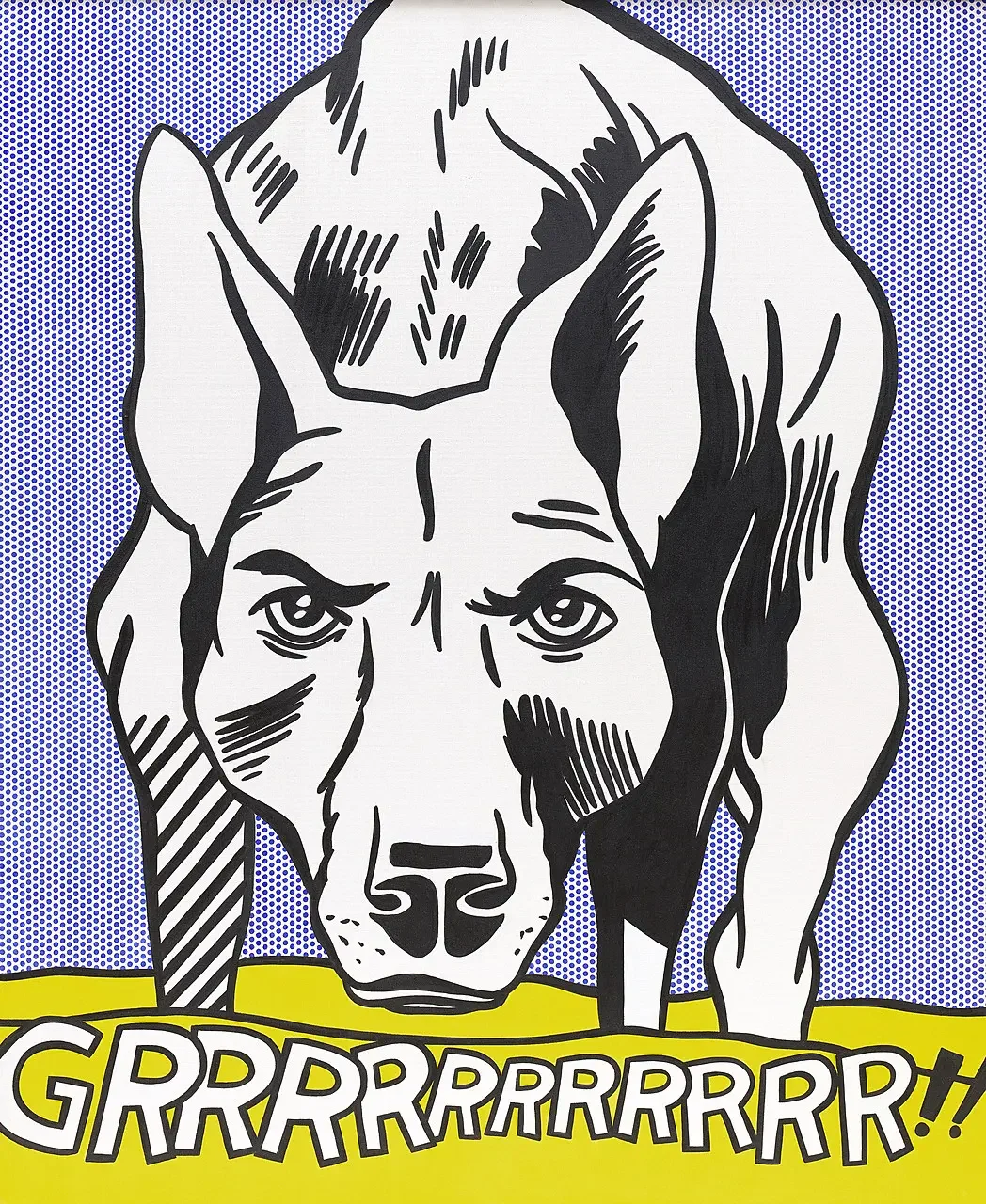
Roy Lichtenstein, Grrrrrrrrrrr!!, 1965, oil and magna on canvas, 68 x 56 1/8 in.
© Solomon R. Guggenheim Museum, New York
In Lichtenstein's hands, the familiar household companion becomes something unmistakably graphic. He lifts a snarling dog straight from the visual language of comic strips, complete with Ben-Day dots and a gloriously drawn-out growl across the top of the canvas. The result is funny, aggressive, and deadpan all at once, turning an everyday animal into a Pop Art spectacle.
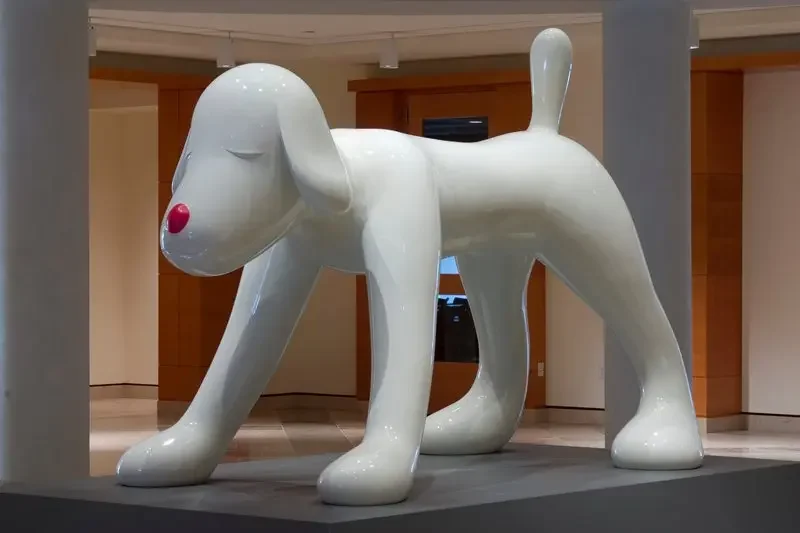
Yoshitomo Nara, Your Dog, 2002, lacquer and urethane on FRP, 72 x 51 x 108 in.
© Yoshitomo Nara and Minneapolis Institute of Art
We close on something quieter. Nara's Your Dog is a large, smooth white sculpture with a slightly bowed head and a face that is difficult to read, at once sweet, solemn, and faintly melancholy. It draws on the flat, wide-eyed characters that recur throughout his work. Standing beside it, most people feel an immediate pull, the same one that has kept animals in our pictures since van Eyck's little terrier in 1434.
Across centuries, artistic movements, and mediums, animals have remained a constant presence in art, appearing as companions, symbols, collaborators, and muses. Whether quietly tucked into the corner of a Renaissance portrait or standing forty feet tall outside a museum, they remind us that some of the most enduring subjects in art are also among the most familiar.

Caroline Browne
Caroline brings a discerning eye and a client-centered approach shaped by experience across galleries, museums and private advisory. Before joining Powell, she held roles at Pace Gallery, the Barnes Foundation and the Copley Society of Art, and served as Assistant Collections Manager at The Heller Group, managing significant acquisitions and complex, large-scale installations.