
From Rembrandt to Rauschenberg: What I learned at Christie’s
I began my career at Christie’s in New York in the Prints and Multiples department. It was an extraordinary place to learn—not only about art, but also about the research, judgment and attention to detail required to guide works responsibly through the auction process.
The department covered an enormous range of art history. I researched and catalogued works spanning from Rembrandt to Rauschenberg, examining everything from Old Master prints to modern and contemporary editions. Prints can be deceptively complex. Two impressions of the same image may differ considerably depending on their state, edition, paper, condition, provenance and printing history. Understanding those distinctions requires close looking, careful research and a willingness to investigate every detail.
That experience taught me that expertise is often found in the particulars. A signature, watermark, publication history or subtle difference in condition can materially affect how a work is understood and valued. It also reinforced the importance of describing art accurately and clearly—without exaggeration, but without overlooking what makes a particular work special.
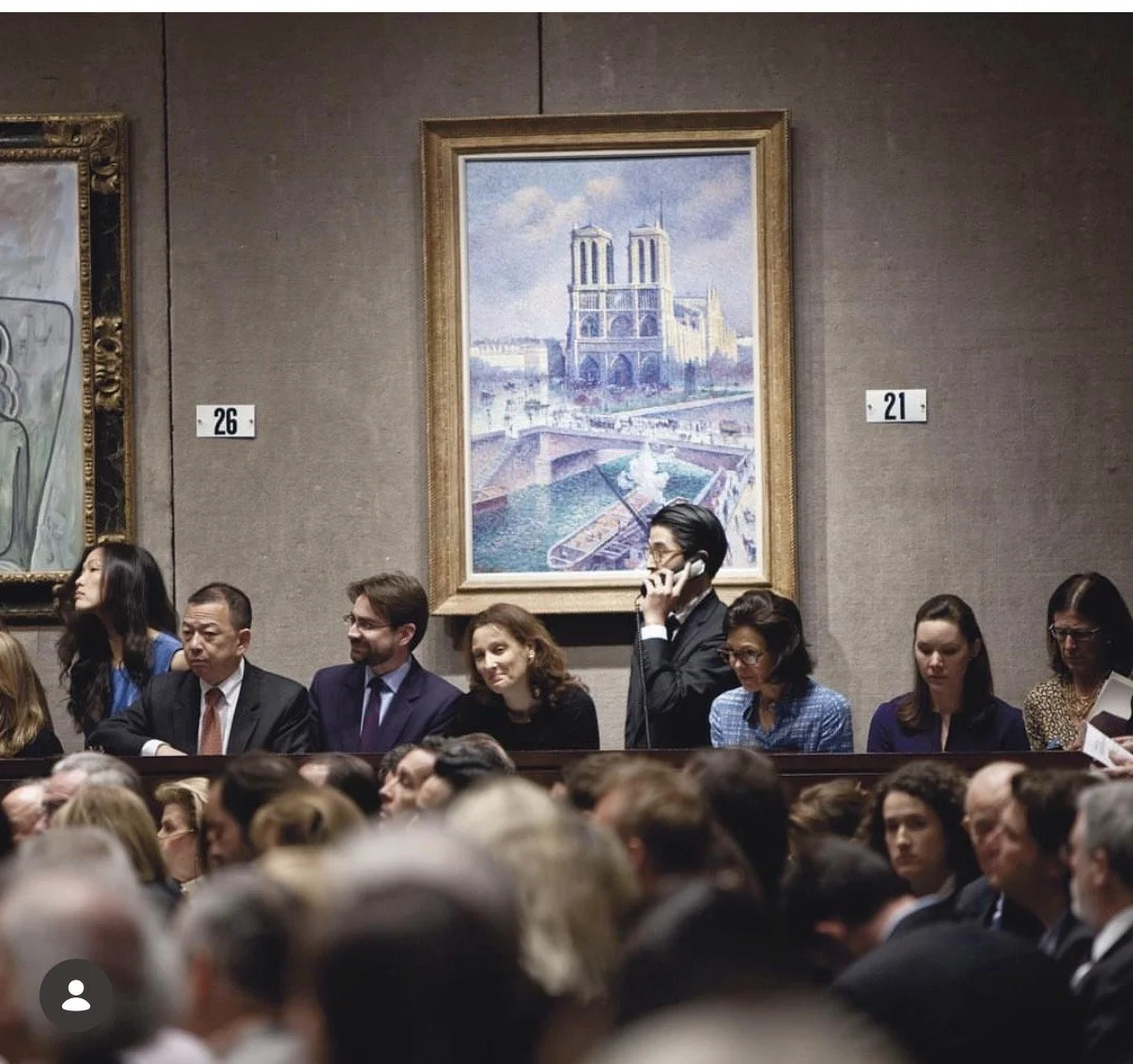
Hadley phone bidding in the Impressionist and Modern Evening sale at Christie’s (second from right).
I later moved to Christie’s Impressionist and Modern Art department, where I worked on the high-profile evening sales. The scale and pace were different, but the underlying principles remained the same. Each work required rigorous research, thoughtful valuation and a clear understanding of its place within an artist’s career and the broader market.
In that department, I worked with clients buying and selling at auction, while also assisting with fine art appraisals. I saw firsthand that major art decisions are rarely only financial. A sale might be prompted by a move, an estate, a change in collecting direction or the need to plan for the next generation. An acquisition might represent the culmination of years of looking—or the beginning of an entirely new interest.
Working at Christie’s also gave me an invaluable view of the auction process from the inside. Auctions can create tremendous opportunities, but they can also feel opaque and intimidating. Estimates, reserves, condition reports, guarantees, premiums and bidding strategies all affect the outcome. Understanding how the system works allows a collector to approach it deliberately rather than reactively.
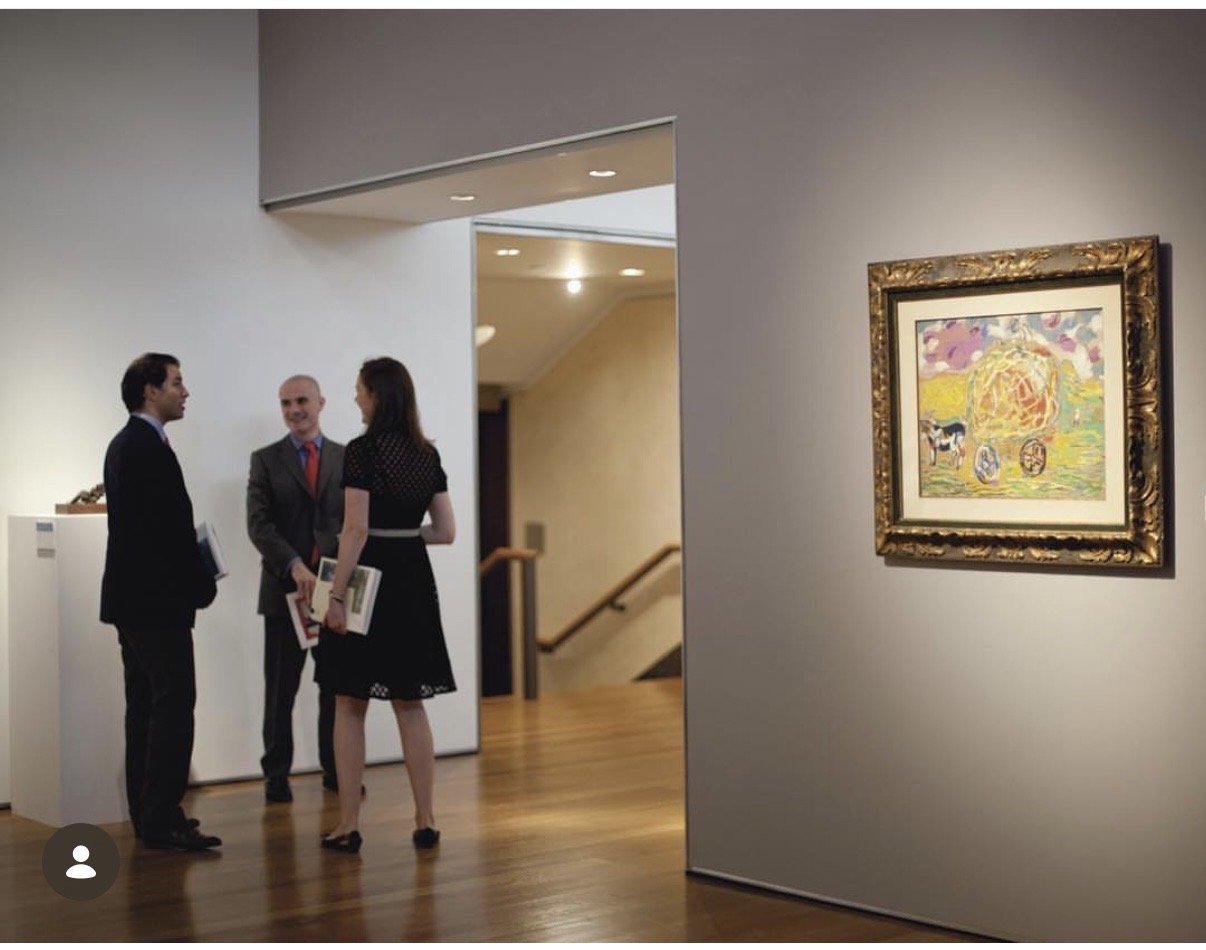
Prior to the auction, all the artworks being offered are installed in Christie’s galleries and on view for two weeks prior to the sale. These exhibitions are free and open to the public and provide an opportunity for anyone interested in the artwork to come and see it.
Hadley with colleagues Adrien Meyer, Global Head of Private Sales and Auctioneer, and Conor Jordan, Deputy Chairman of the Impressionist and Modern Art department.
A Record-Breaking Picasso
One of the defining experiences of my time at Christie’s was working in the Impressionist and Modern Art department when we sold the extraordinary collection of Frances Brody.
The collection included Pablo Picasso’s 1932 masterpiece Nude, Green Leaves and Bust, a monumental portrait of his muse and lover Marie-Thérèse Walter. The painting had remained in the Brody collection for decades and was largely unknown to the public. Seeing a work of that importance emerge from a private collection—and watching the research, marketing and client work that preceded the sale—gave me an extraordinary view of how a masterpiece is brought to market.
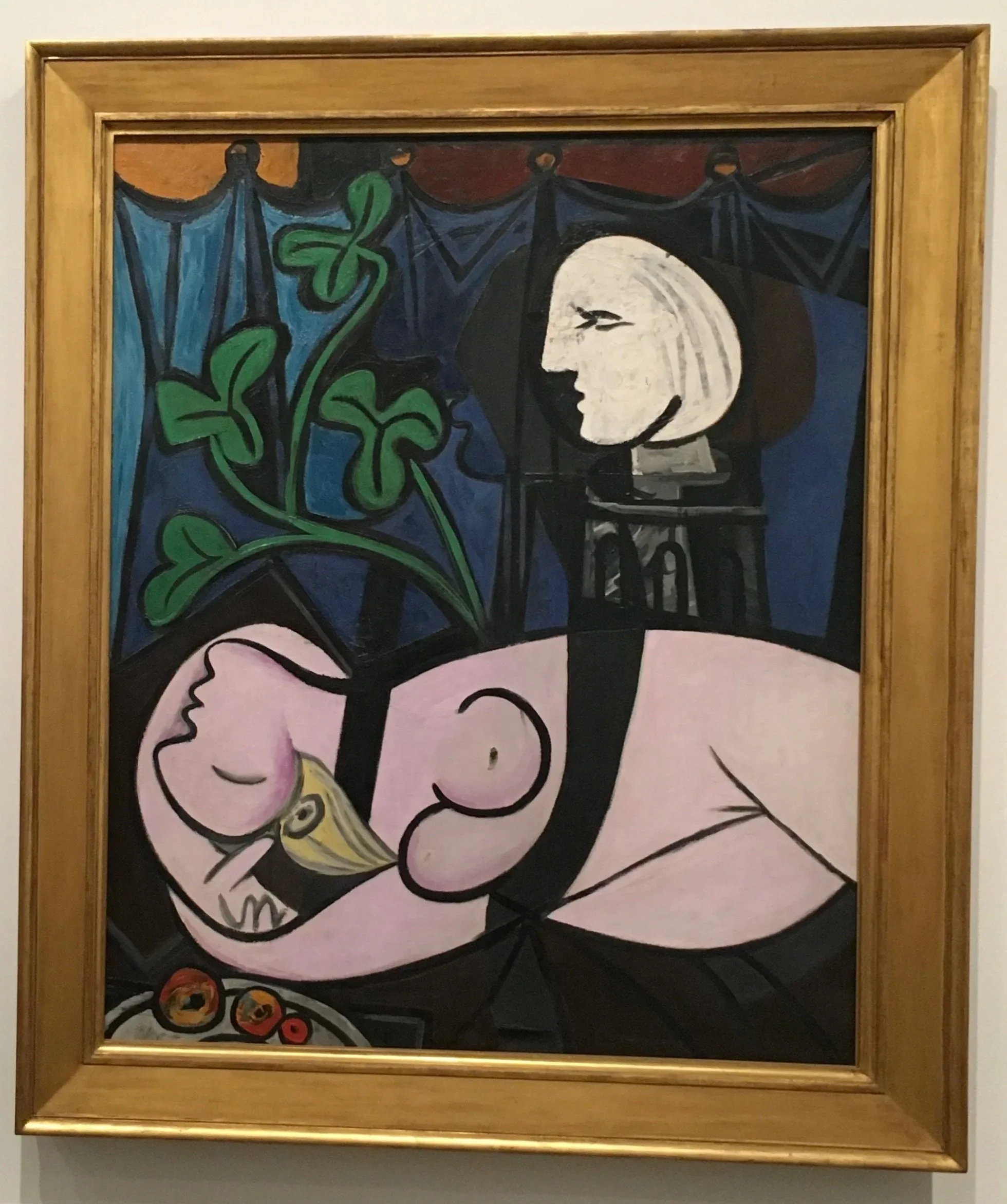
Picasso’s Nude, Green Leaves and Bust, oil on canvas, 1932
When the painting came to auction in May 2010, the atmosphere in the saleroom was electric. After intense international bidding, it sold for $106,482,500, becoming, at the time, the most expensive work of art ever sold at auction. The Brody collection as a whole realized more than $225 million.
Being part of that sale was thrilling, but it was also instructive. The record-breaking price captured the headlines, yet the result reflected years of careful collecting by Sidney and Frances Brody and months of meticulous work by Christie’s specialists. Every element mattered: scholarship, provenance, condition, presentation, timing and the ability to communicate why the painting was truly exceptional.
It also showed me the importance of understanding the person and the collection behind a work of art. The Brodys did not simply accumulate famous names. They assembled a deeply considered collection and lived with these works for decades. The Picasso was not merely an asset waiting to be sold; it had been part of their home and their lives.
That experience continues to shape the way I advise collectors today. A successful sale requires market knowledge and execution, but it also requires sensitivity to the history of the collection and to what the art has meant to the people who owned it.
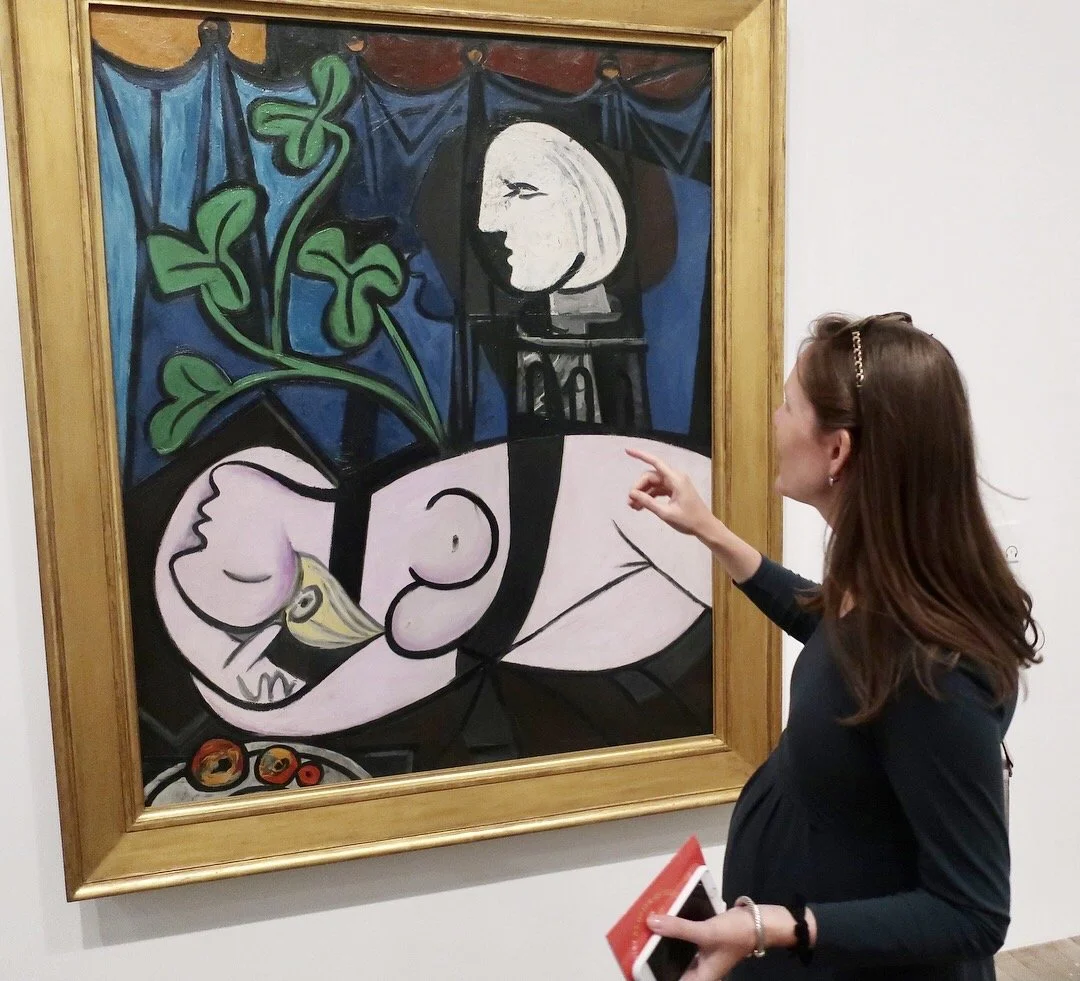
A very pregnant Hadley is reunited with Nude, Green Leaves and Bust when it was included in the “Picasso 1932 — Love, Fame, Tragedy” exhibition at the Tate in London.